target you?”
“No.”
“Did you deliberately conceal your identity?”
“No. I was wearing professional clothing, carrying my credentials in my
briefcase and jacket, and walking toward the side entrance. I had not
yet reached the administrative office.”
The investigator asked whether Maya had considered announcing herself
from a distance. Maya explained that she had not been given a reason to
believe the public walkway was restricted. She had expected to enter the
building, introduce herself, and begin the scheduled transition
meetings.
The evidence specialist then displayed the exterior camera file. The
missing eleven seconds were not a random loss. The file had been
interrupted by a command sent from the network. The command itself was
logged, but the user account was a shared administrative account.
“Can you identify the workstation?” Maya asked.
“Yes,” the specialist said. “The command came through the command-office
network.”
Dana looked at the access log. “That puts us back in Harlan’s office.”
“It puts us back in the office,” Maya corrected. “We still need to
identify the person who used the account.”
The distinction was important. Harlan’s terminal had originated the
call, and the camera command had come through the same office network.
But a shared account could conceal another user’s activity. The
investigation needed a person, not just a location.
Miller’s interview began that afternoon. He admitted that Vance had
drawn his weapon before either officer spoke to Maya. He admitted that
Maya had identified herself and asked them to check her pocket. He also
admitted that he had seen no weapon, no attempt to open a patrol car,
and no movement suggesting she was reaching for one.
“Why didn’t you intervene?” Dana asked.
Miller stared at the table. “Because Marcus was the senior officer. He
told me the call said she might have a weapon. I believed him.”
“Did you believe her when she said she was the chief?”
“I didn’t know what to believe.”
“Did you check?”
“No.”
“Why?”
Miller rubbed his palms against his trousers. “I was afraid of making
the wrong call in front of him.”
Dana waited.
“He has a way of making you feel like you’re incompetent if you question
him,” Miller continued. “He says hesitation gets people hurt. Sometimes
that’s true. But that morning, I think I was more worried about
embarrassing him than about whether we were doing the right thing.”
It was the first honest explanation anyone had offered. It did not
excuse Miller. It did, however, identify a pressure point that a policy
manual could not fix by itself.
Maya listened from the observation room. She felt anger rise, then
settle into something colder. Miller had not struck her, but he had
helped restrain her. He had heard her identify herself and chosen
silence. His fear was real. So was the harm caused by his decision.
After the interview, Dana told Maya that the dispatch caller had used an
internal extension. The originating terminal was the command office, but
the voice could not yet be matched to a person. A preliminary audio
comparison was underway.
“Could the call have been made by an assistant?” Maya asked.
“Yes.”
“Could it have been a transferred outside call?”
“Possibly, but the routing data doesn’t show a normal transfer.”
Maya looked through the conference-room window at the busy precinct
floor. Officers were still taking calls, writing reports, and moving
between desks. The institution did not pause because its new chief had
been handcuffed. That was both reassuring and troubling. The same people
who had failed to intervene were still working as if the morning were an
isolated incident.
Dana returned with a second document. “There’s another record you should
see.”
It was a complaint summary covering the previous eighteen months.
Several citizen complaints involving Vance had been closed after
informal supervisory review. None had resulted in discipline. The
details varied, but the pattern was familiar: officers failing to verify
information, escalating encounters unnecessarily, and treating questions
as defiance.
Maya read the summaries slowly. “Were the complainants interviewed?”
“Some were. Others withdrew their complaints.”
“Why?”
“The files don’t say.”
“Were the original recordings preserved?”
“Not consistently.”
Maya closed the folder. The incident outside the precinct was no longer
only about two officers making a terrible decision. It might be a
visible example of a system that had learned to explain away the same
behavior.
Dana pointed to one entry. “This complaint was closed by Deputy Chief
Harlan.”
The complainant’s name was Denise Walker. Her statement said she had
asked an officer to explain why her vehicle had been searched. The
report described her as hostile and uncooperative. The complaint had
been dismissed without an interview.
Maya recognized the address. It was two blocks from Precinct 12.
“Find her,” Maya said. “If she is willing to speak, I want her account.
Do not promise an outcome.”
Dana nodded.
Before the meeting ended, the evidence specialist received a message.
The audio comparison had identified a likely match for the voice that
placed the suspicious-person call.
The specialist looked at Dana, then at Maya.
“The caller sounds like someone assigned to the command office,” he
said. “Someone whose voice is already on the department’s recorded
training briefings.”
“Who?” Maya asked.
The specialist turned the laptop around.
The name on the screen was not Harlan’s.
It was Marcus Vance’s.
6 | The Complaints No One Read
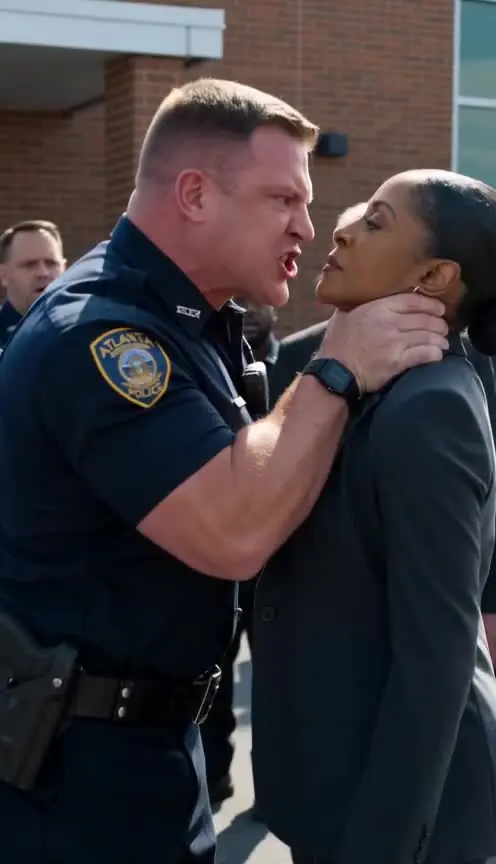
The preliminary voice match changed the direction of the investigation,
but it did not close the case. The evidence specialist was careful to
explain that voice comparison was not proof by itself. The recording was
short, the caller had spoken through a phone system, and the
department’s internal training archive contained only a limited sample
of Vance’s voice. The result was strong enough to justify a follow-up
interview, not strong enough to support a final conclusion.
Maya insisted that the distinction remain clear in every written report.
She had no interest in replacing one careless assumption with another.
Vance had been allowed to treat a briefcase as a concealed weapon
without evidence. The department would not treat a preliminary voice
match as a confession.