The ballroom stood
at the top of the town, a wide room with a high ceiling and tall windows that looked out over the rooftops and the river beyond. Late afternoon light fell through the glass in long gold bars and lay across the polished floor, and the air smelled of white lilies and warm wax. Round tables stood in rows, each one dressed in white linen, each one set with plates edged in gold and tall glasses that caught the light. White lilies stood in low vases at the center of every table, their petals open, their scent soft in the air. At the far end of the room a small band waited with their instruments, and a dance floor of pale wood lay empty and shining between the tables, waiting for the evening. The wedding planner moved among the tables with a list in her hand, straightening a chair here, turning a vase there, speaking in a low voice to the servers who carried trays of glasses through the side door. Everything was ready, and the room held its breath the way a room holds its breath before a wedding, bright and still and full of promise.
The guests came in a slow stream through the tall doors, women in long dresses of blue and green and soft gray, men in dark suits with bright ties, old friends greeting each other with cries of joy, cousins embracing in the doorway, children in stiff new clothes running between the tables until their mothers caught them by the hand. The best man stood near the door with a smile that never left his face, shaking hands and guiding guests to their seats, and the wedding planner checked names off her list and pointed the late arrivals toward the empty chairs. Music drifted from the band, soft and slow, and the light through the tall windows turned a deeper gold as the afternoon wore on, and the ballroom filled with voices and laughter and the rustle of fine cloth. Every seat filled except one, a single chair at the head table, set beside the chair where Jasper would sit, and no one remarked on it, and no one asked who the chair was for.
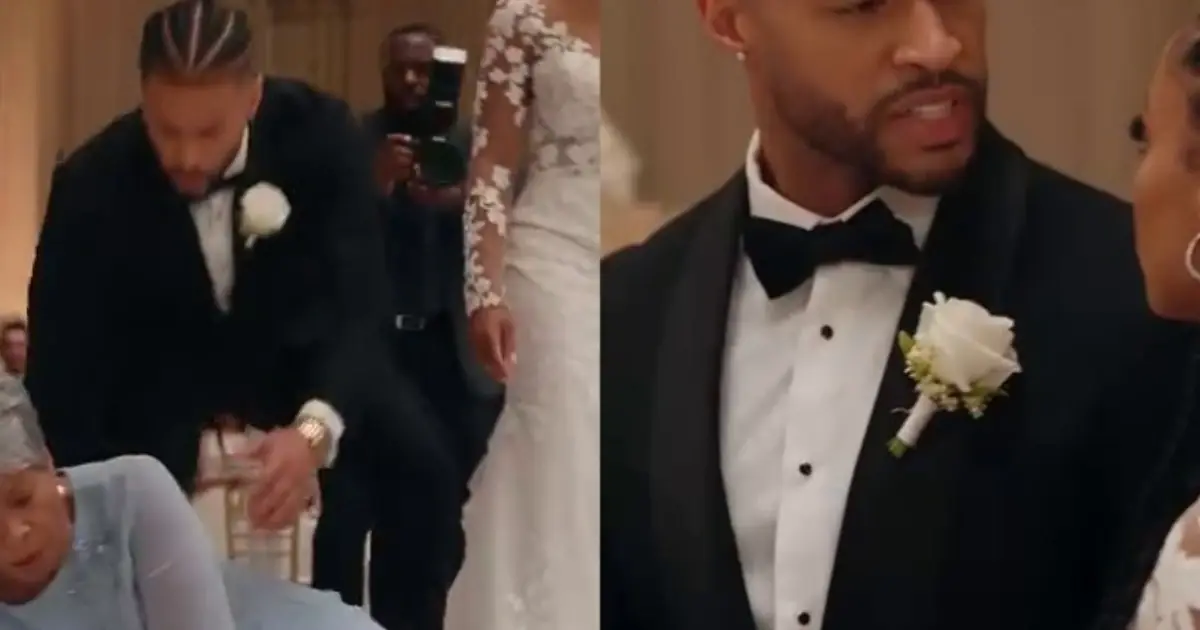
Jasper stood at the front of the room in his black tuxedo, his braided hair neat against his head, a single white rose fixed to his lapel with a small pin. He had stood there for a long while, and his hands were damp, and he wiped them on a handkerchief and put the handkerchief away, and he looked toward the tall doors again and again, and each time his heart beat a little faster. Hannah had pinned the white rose on his lapel that morning, her fingers steady, her eyes bright, and she had told him that a white rose meant a new beginning, and that the day would be perfect, and that he should not worry about anything at all. He believed her, and he loved her, and he wanted the day to be perfect for her sake. But as he stood waiting, his thoughts went back again and again to his mother, to Celia in her small house at the edge of town, to the telephone call in which Hannah had told him, gently, that his mother was too unwell to travel, that the doctor had told her to rest, that she sent her love and her blessing and would think of them all day long. Jasper had believed that too, and he had sent his mother a long message of love, and he had not called her again, because Hannah had said that rest was what she needed most, and that a telephone call would only tire her. Now, standing in the bright ballroom with the white rose on his chest, he felt the absence of his mother like a hollow space inside his joy, and he told himself that she was with them in spirit, and that she would be glad to know that her son was happy.
The music changed, and the guests rose to their feet, and the tall doors opened, and Hannah came into the ballroom on her father's arm. She wore a white lace wedding gown that fell in soft folds to the floor, and her long braids were drawn up into a top bun, and a thin veil lay over her hair like morning mist. She moved slowly down the long aisle between the tables, and every face in the room turned toward her, and the light from the tall windows caught the lace of her gown and made it glow. Jasper watched her come, and his throat went tight, and he forgot about the empty chair and about his mother and about everything except the woman walking toward him with her eyes fixed on his face. Hannah smiled as she walked, a small bright smile, and her eyes were shining, and when she reached the front of the room her father placed her hand in Jasper's hand, and Jasper closed his fingers around hers, and the warmth of her hand steadied him, and the minister began to speak.
The vows were short and simple, and the words fell into the quiet room one by one. Jasper spoke first, his voice low and steady, promising to love her and to keep her and to walk beside her through all the days of their life together. Hannah spoke next, her voice clear and bright, promising the same in return, and her eyes never left his face while she spoke. Then the rings were brought forward on a small cushion, and Jasper slid a plain gold band onto Hannah's finger, and Hannah slid a matching band onto Jasper's finger, and the minister smiled and told them that they were husband and wife, and Jasper leaned forward and kissed her, and the ballroom erupted in applause and cheers, and the guests rose to their feet and clapped until their hands were sore. The band struck up a lively tune, and the guests laughed and cried and embraced each other, and the wedding had begun in earnest, and the joy in the room was bright enough to touch.
The reception unfolded in a golden haze of music and laughter and good food. The first dance belonged to Hannah and Jasper alone, and they moved slowly across the pale wooden floor while the guests watched from their tables, and Hannah's white lace gown turned in the light, and Jasper held her close and whispered in her ear, and she laughed and rested her head against his shoulder. Then the best man rose to give his toast, and he spoke of Jasper as a boy and as a young man, and of the day Jasper had first spoken of Hannah, and of the long road that had led them to this bright room, and his words made the guests laugh and then made them wipe their eyes. Glasses were raised, and the toast was drunk, and the servers brought out course after course, and the music played on, and the afternoon turned slowly into evening, and the light through the tall windows faded from gold to rose to a soft gray blue.
The wedding cake stood on a table near the band, a tall white cake with sugar flowers, and when the time came Hannah and Jasper stood beside it together, and Hannah took the knife, and Jasper put his hand over hers, and they cut the first slice together while the guests cheered, and Hannah fed Jasper a bite, and he fed her a bite, and the sweetness of it made them both laugh, and the wedding planner cut the rest and the servers carried slices to every table, and the guests ate and praised the cake, and Hannah told the woman at the next table that she had picked the flavor herself, vanilla with a filling of lemon cream, and that she had tasted six cakes before she found the right one.
Hannah was radiant that evening, and everyone said so, and the words followed her around the room as she moved from table to table, greeting guests and accepting kisses on the cheek and compliments on her gown. She laughed easily, and her laughter rang out above the music, and she danced with her father and with the best man and with old friends from school, and each time she returned to Jasper she was breathless and smiling, and Jasper watched her with pride and with wonder, as if he could not quite believe that the bright woman in white lace was his wife. He held her hand whenever she was near, and he kept the white rose on his lapel straight with a touch of his fingers now and then, and he thought of the morning when she had pinned it there, and of the way her hands had lingered for a moment on his chest, and of the promise in her eyes. The evening was everything he had hoped it would be, and the ballroom glowed with candlelight, and the music never stopped, and the joy in the room seemed as if it would never end.
Yet more than once that evening Jasper found his eyes drifting to the empty chair at the head table, the single chair set beside his own, and each time his heart gave a small ache. He thought of his mother in her small house at the edge of town, of the blue dress she had sewn for herself long ago, of the way she had always said that she would be there on his wedding day, no matter what, and of the quiet voice on the telephone telling him that she was too unwell to travel. He had not seen her in weeks, and the distance between them weighed on him, and he wished that she could have seen Hannah in her white lace gown and the ballroom full of light and music. Hannah noticed his gaze, and she took his hand in hers, and she squeezed his fingers, and she told him softly that his mother was thinking of them, and that she had sent her blessing, and that the day was perfect just as it was, and Jasper nodded and smiled, and he let the matter go, and he turned back to the celebration, and the music swept the sadness away again.
As the evening deepened, the candles burned lower in their holders, and the light in the ballroom grew softer and warmer, and the band played slower songs, and the older guests swayed on the dance floor with their eyes closed, and the children who had run between the tables all afternoon now slept in their mothers arms, their heads resting on soft shoulders. Hannah kicked off her shoes under the table and danced in her stockinged feet, laughing at herself, and Jasper laughed with her, and the best man raised his glass again, and the guests cheered, and the night felt endless and kind. The wedding planner moved quietly among the tables, making sure that glasses stayed full and that no one wanted for anything, and the servers cleared plates and brought out sweet dishes, and the smell of sugar and warm fruit drifted through the room. It was a perfect evening, and everyone in the ballroom knew it, and the happiness of the bride and groom shone over the whole gathering like light.
At the far end of the ballroom, beyond the last row of tables, the tall doors stood open to the corridor, and the corridor beyond was quiet and dim, lit only by a single lamp on the wall. No one looked toward the doors, and no one noticed the corridor, for the music and the laughter filled the room, and all eyes were on the bride and groom. But the doors stood open, and the quiet corridor waited, and the evening, which had seemed endless and kind, was about to change.
Celia had come by train that morning, and the journey had been long, and the train had been crowded, and she had sat by the window with the small box of biscuits on her lap, watching the fields roll by, and thinking of her son. She had sewn the pale blue dress herself, weeks before, sitting by the lamp in her small house at the edge of town, and she had tried it on three times, and each time she had smoothed the skirt with her hands and told herself that it would do, that it was her best dress, and that a mother did not need a fine dress to see her son marry. Her gray hair was brushed back and pinned neatly, and her shoes were polished, and the small box in her hands was tied with a ribbon, and inside the box lay the biscuits she had baked the night before, golden and sweet, for the wedding table. Her heart was weak, and the doctor had told her to rest, and to avoid excitement, and to walk slowly, and she had promised him that she would be careful, and she meant to keep that promise. But when the train had stopped at the town, and she had stepped down onto the platform, her heart had beaten faster with hope, and she had walked through the streets toward the ballroom with slow careful steps, and she had told herself that she would only stay a little while, that she would only see her son in his fine suit, and that no one would mind an old woman standing quietly at the back of the room.
The corridor outside the ballroom was quiet and dim, lit only by a single lamp on the wall, and Celia stood in the doorway for a long moment, looking in at the bright room. The music washed over her, and the light from the tall windows and the candles made the whole room glow, and the guests in their fine clothes laughed and talked at the round tables, and the band played a slow sweet tune, and the air smelled of white lilies and warm wax and good food. Celia held the small box a little tighter, and she smoothed her blue dress with one hand, and she took a slow breath, and she stepped through the doorway and into the ballroom, walking slowly and quietly, the way a woman walks when she does not wish to disturb anyone. Her shoes made almost no sound on the polished floor, and her blue dress moved softly around her ankles, and her gray head was bowed a little, and her eyes searched the bright room for the face of her son.
A few guests near the door noticed her first, and their conversation faltered, and they turned their heads to look at the old woman in the pale blue dress who had come in alone, carrying a small box tied with a ribbon. The wedding planner, moving among the tables with her list, glanced toward the door, and her brow creased, and she looked down at her list and then up again at Celia, as if she could not find the old woman's name anywhere on the page. Celia walked on, slowly, past the first row of tables, and the guests at the tables turned to watch her pass, and a low murmur rose and fell around her, soft as wind through leaves. She did not hurry, and she did not look at the guests, and her eyes stayed fixed on the front of the room, where the head table stood, and where she hoped to see her son. Her heart beat hard in her chest, and her breath came a little short, and she pressed one hand to her chest for a moment, and then she let it fall again, and she walked on.
The guests at the back tables watched the old woman with growing curiosity, and a few of them leaned toward each other and whispered behind their hands. An old man with white hair at the nearest table peered at Celia through his spectacles and frowned, as if her face stirred a memory he could not quite catch, and the woman beside him touched his arm and shook her head, and they both fell silent. The wedding planner moved quickly toward the door, her list still in her hand, and she reached Celia and smiled a bright practiced smile, and she asked in a low voice if she could help, and if the old lady had come to the right room, and Celia told her, softly, that she had come for her son's wedding, and that her son was the groom, and the wedding planner's smile faltered, and she looked down at her list again, and she saw no name that matched the old woman, and she did not know what to do. She glanced toward the front of the room, where Hannah stood frozen in the middle of the dance floor, and then she glanced back at Celia, and she stepped aside, and she let the old woman walk on, and she told herself that the bride would know what to do, and that it was not her place to turn away the mother of the groom.
Hannah saw her from across the room, and the sight stopped her cold. She had been dancing with the best man, laughing, her white lace gown turning in the light, and then her eyes caught the movement at the far end of the ballroom, and she saw the small figure in the pale blue dress walking slowly between the tables, and her laughter died in her throat, and her feet stopped moving, and her face went white and then red. It was Celia. It was Jasper's mother, the woman Hannah had crossed off the guest list with a firm stroke of her pen, the woman Hannah had told Jasper was too unwell to travel, the woman who was supposed to be resting in her small house at the edge of town. Hannah stared, and her mind raced, and her hands tightened into fists at her sides, and the joy of the evening fell away from her all at once, leaving only shock and then a hot rush of anger. How had she come? Who had told her? What would the guests think? What would Jasper think when he saw his mother standing there in her plain blue dress, carrying a box tied with a ribbon, looking like a poor relation who had wandered in off the street? Hannah's face hardened, and her mouth set in a thin line, and her eyes narrowed, and the bright bride of a moment before was gone, and in her place stood a woman who had been caught in a lie and did not mean to be shamed by it.
Hannah thought fast, and her thoughts came sharp and hard. Celia had no right to be here. Hannah had made the decision, and she had made it for the good of the wedding, and for the good of Jasper, and for the good of them both. An old woman in a homemade dress, a widow from a small house at the edge of town, would only embarrass them before guests who came from fine houses and wore fine clothes. Hannah had told Jasper that his mother was too unwell to travel, and Jasper had believed her, and the lie had kept the day clean and perfect, and now Celia had walked in and spoiled it all. Hannah looked at the blue dress, plain and faded at the seams, and at the small box tied with a ribbon, and at the gray hair pinned back so neatly, and her anger grew hotter, and her face grew harder, and she thought of the guests watching, and of the whispers rising around the room, and of the perfect evening cracking open in front of everyone. She would not let an old woman ruin her wedding. She would send Celia away, quietly and firmly, before Jasper saw her, and the evening would go on as if nothing had happened, and the lie would hold, and the day would stay perfect.
Jasper had not seen his mother yet. He stood near the head table, talking with two old friends from school, laughing at a story about their boyhood, his glass in his hand, the white rose bright on his lapel. He had not looked toward the door, and he did not know that the woman he loved most in the world after Hannah had walked into the room. The best man, standing nearby, followed Hannah's gaze across the room, and he saw the old woman in blue, and he saw Hannah's face, hard and white, and he frowned, and he set his glass down on the nearest table, and he took a step toward Hannah, and then he stopped, uncertain what to do. The band played on, and the guests near the front had not yet noticed anything amiss, and the music covered the low murmur that spread from table to table at the back of the room, where the guests watched the old woman walk slowly toward the front.
Celia walked on, past the second row of tables, past the third, and her steps were slow but steady, and her eyes never left the head table, and a faint smile touched her lips when she caught sight of Jasper's back, broad in his black tuxedo, and of the white rose on his lapel, bright against the dark cloth. She did not see Hannah yet, and she did not see the anger on the bride's face, and she thought only of her son, and of the day she had dreamed of for so long, and of the blessing she had carried all the way by train to give him. Her heart beat hard, and her breath came short again, and she pressed her hand to her chest once more, and she told herself to walk slowly, and to breathe deeply, and to be calm, for the doctor had warned her about excitement, and she did not want to make a scene on her son's wedding day. The small box of biscuits felt heavier in her hands with every step, and the ribbon on it trembled a little, and the ballroom seemed very large and very bright, and the faces of the guests seemed very far away.
Hannah set her glass down on the nearest table with a sharp click, and she lifted the skirt of her white lace gown with one hand, and she began to walk across the ballroom toward Celia, her steps quick and firm on the polished floor. The guests near her path drew back to let her pass, and their eyes followed her, and the murmur in the room grew louder, and the music seemed to falter for a moment, as if the band had felt the change in the air. Hannah's face was hard as stone, and her eyes were fixed on the old woman in blue, and she did not look at Jasper, and she did not look at the guests, and she thought only of the lie she had told and of the old woman who had come to undo it. Celia saw her coming, and she stopped walking, and she stood still in the middle of the ballroom floor, and her face lit with hope, and she held out the small box of biscuits, and she smiled, and she waited for the bride to speak. Hannah reached her, and stood before her, and the music faded, and the guests nearby fell silent, and the whole bright ballroom held its breath.
The ballroom glowed with candlelight, and the long tables were dressed in white cloth, and the glasses caught the light and threw it back in small bright sparks across the room. The guests sat in rows of chairs with their faces turned toward the head table, and the music played soft and low, and the air smelled of lilies and warm bread and the perfume that drifted from the women in their best dresses. Hannah sat at the head table in her white lace gown, and the lace fell in soft folds around her shoulders, and her long braids were piled high in a top bun, and the small white flowers woven through them shone in the candlelight. Jasper sat beside her in his black tuxedo, and the single white rose on his lapel stood out bright against the dark cloth, and his hand rested on the table close to hers, and he smiled at the guests who came to the table to wish them joy. The best man sat a little farther down the table with a glass in his hand, and the wedding planner moved between the tables with a quiet step, and the evening felt full and golden, as if nothing in the world could go wrong in a room so bright.
The best man had spoken earlier, and his toast had made the guests laugh, and he had told them of the boy Jasper had been, and of the man he had become, and Hannah had laughed with the rest, and her face had glowed, and Jasper had squeezed her hand under the table, and the evening had felt like the start of everything good. Hannah had dreamed of this day since she was a girl, and she had planned every flower and every candle, and she had picked the music herself, and she had told herself that nothing would spoil it, and that no one would be allowed to spoil it, and the thought had sat in her mind like a stone through all the happy hours of the day.
Hannah lifted her glass and looked out across the ballroom, and her smile was wide and practiced, and her eyes moved from table to table, and then they stopped. Near the door at the far end of the room stood an older woman in a pale blue dress, and the dress was plain and soft, and the fabric hung loose around her shoulders, and her short gray hair was combed back from her face, and she held a small box wrapped in brown paper against her chest with both hands. Hannah knew that face at once, and her smile froze where it was, and her fingers tightened around the stem of her glass until her knuckles showed white. It was Celia, and Celia was not meant to be here, and Hannah had made certain of that weeks before, when she had taken a pen and drawn a line through the name on the guest list, and she had told Jasper that his mother was too unwell to travel, and that the journey would be too much for her heart. The lie had been smooth and easy, and Jasper had believed it, and Hannah had believed that the matter was settled, and now the woman herself stood in the doorway of the ballroom with a box in her hands and hope in her eyes, and the lie cracked open in the middle of the wedding.
Celia stood near the door and looked around the ballroom with wonder, and her eyes found the head table, and she saw her son in his black tuxedo with the white rose on his lapel, and her face lit up with a joy so plain that anyone watching could have read it from across the room. She had traveled by train through the morning and the afternoon, and she had sat by the window and watched the fields go by, and she had held the box of biscuits on her lap the whole way, and she had thought of the boy she had raised alone after his father died, and of the man he had become, and of the day she had dreamed of since he was small. She had sewed the blue dress herself in the evenings, and she had pressed it twice before she put it on, and she had brushed her gray hair until it shone, and she had told herself that she would stand at the back and watch, and that she would not make a fuss, and that a mother did not need a seat at the front to be glad. She took a small step into the room, and then another, and she looked for a place to set down the box, and she smiled at a guest who turned to look at her, and she did not know that Hannah had already seen her, and that Hannah was already rising from her chair.
Hannah remembered the evening she had sat at the kitchen table with the guest list spread before her, and the pen in her hand, and the name of the mother of the groom written in her own neat hand, and she remembered the moment she had drawn the line through it, and the way the ink had bled a little into the paper, and the small cold feeling in her chest as she did it, and the lie she had told Jasper afterward, that his mother was too unwell to travel, and that the journey would be too much for her heart, and the way he had believed her without a question, and the way she had told herself that it was for his own good, and that a wedding should be beautiful, and that an old woman in a plain blue dress would not fit the picture she had planned.
Hannah rose from the head table, and the lace of her gown whispered as she stood, and she smoothed the front of her dress with both hands, and her face had gone still and cold, and the smile was gone from it as if it had never been there. Jasper looked up at her and asked where she was going, and she did not answer him, and she walked away from the table with a steady step, and the guests at the nearest tables turned their heads to watch her pass, and the music seemed to grow quieter as she crossed the floor. The best man set down his glass and watched her go, and the wedding planner paused between the tables with a tray in her hands, and the room began to feel the change in the air, the way a room feels when a storm is coming and no one has yet said so aloud. Hannah walked straight toward the door, and her gown swept the floor behind her, and her braids shone in the candlelight, and her eyes never left the older woman in the blue dress, and Celia saw her coming and smiled wider, and she held the box out a little, as if to offer it, and she opened her mouth to speak.
Celia spoke first, and her voice was soft and warm, and it trembled a little with the happiness of the day. "Hannah," she said. "You look beautiful. I came to see my son marry, and to wish you both joy, and I brought a little something I baked for the table." She held the box toward Hannah with both hands, and the brown paper was neat and the string was tied in a small bow, and her hands shook a little with the weight of the box and with the hope that had carried her all the way by train. "I know I was not expected," she said. "I only wanted to stand at the back and watch him. I will not be in the way."
Hannah stopped in front of her, and she looked down at the box, and then at the blue dress, and then at the gray hair, and her mouth tightened into a thin line, and when she spoke her voice was loud enough for the guests at the nearest tables to hear every word. "You were not invited," she said. "You are not family here, and you were not asked to come, and this dress is shabby, and you have no place at this wedding." The words fell into the room like stones into still water, and the guests at the nearest tables went silent, and a woman put a hand to her mouth, and a man set down his fork, and the music faltered and stopped, and the whole ballroom seemed to hold its breath. Hannah did not lower her voice. "Leave now," she said. "Go back to your house and stay there. This is my day, and I will not have you in it."
The silence spread from table to table, and a woman at the nearest table put down her fork, and a man beside her stared at his plate, and an old guest shook his head slowly, and the children who had been running between the tables stopped and stood still, and the best man rose halfway from his chair with his glass still in his hand, and his face had gone pale, and the wedding planner took a step toward the door and then stopped, and no one knew what to say, and no one knew whether to look at the bride or at the old woman, and Hannah stood with her head high and her eyes cold, and she did not care who had heard, and she did not care what they thought, and the cruelty of her words hung in the air of the ballroom like smoke.