the same room as the officials who had closed them.
As Maya stepped into the hallway, Dana caught up with her.
“We received a new piece of evidence,” Dana said. “The phone company
returned the source data for the internal call.”
“Does it identify the caller?”
“Not directly. But it identifies the handset that initiated the call.”
“Whose handset?”
Dana looked toward the hearing chamber, where Harlan was speaking
quietly with his attorney.
“It was a department phone assigned to the deputy chief’s office,” she
said. “And the call was placed while Harlan was logged into the command
terminal.”
Maya stopped walking.
“Can we prove he held the phone?”
“Not yet.”
“Then keep looking.”
Dana nodded. “There’s more. The phone’s location data shows it was
inside the command office at the time of the call.”
Maya looked back at the closed hearing-room doors. The evidence was
narrowing the possibilities, but it still left one unanswered question:
whether Harlan had acted alone, or whether he had been protecting a
9 | The Truth in the Recording
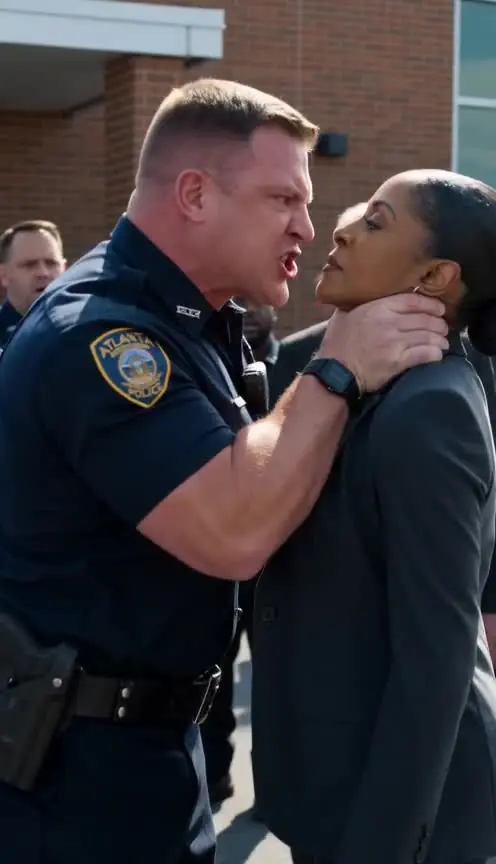
The final phase of the investigation began with a problem that had
frustrated the team from the start: the evidence pointed toward the
command office, but no single record showed who had made the call, who
had interrupted the camera feed, and who had prepared the arrival note.
The department’s systems had been designed to make work easy, not to
make accountability clear. Shared accounts, informal approvals, and
incomplete logs had turned ordinary administrative shortcuts into
obstacles.
Dana Whitaker requested a forensic review of every device connected to
the command-office network during the relevant period. The city auditor
approved the request, and the department’s technology vendor sent a
specialist to create verified copies. The review took several days. Maya
stayed out of the evidence room and received only the reports necessary
to keep the precinct operating.
In the meantime, she appointed Captain Brooks as acting commander of
Precinct 12. Brooks accepted on the condition that the review team
remain independent and that she not be asked to influence witnesses.
“You’ll have authority to keep the precinct running,” Maya told her.
“You will not be asked to defend the past.”
Brooks looked uncertain. “Some officers will say I took your side.”
“You are taking the side of the department’s obligations. If someone
believes that is a personal alliance, they need to reconsider what the
uniform means.”
The first change was practical. Every officer was required to activate a
body camera before initiating a non-emergency contact, with exceptions
documented and reviewed. Dispatchers were instructed to preserve
original call audio and identify whether a call came through a public
line, a transferred line, or an internal extension. The department also
began using a temporary evidence log for camera-system access.
Maya did not present these changes as a cure. They were safeguards while
the larger audit continued.
She also met privately with the officers who had not been involved in
the incident. Some were angry. They believed the department was being
punished because two officers had mishandled a situation. Others said
the review was overdue. One veteran sergeant told her that he had spent
years warning supervisors that complaint files were being closed too
quickly.
“Why didn’t you go higher?” Maya asked.
“I did. The answer was that I was creating friction.”
“Did you keep copies of the reports?”
“Yes.”
“Give them to the independent team. Don’t circulate them.”
The sergeant nodded. “I can do that.”
The evidence team eventually recovered a deleted message from the
department phone assigned to Harlan’s office. It had been sent to Vance
at 7:11 a.m. on the morning of the incident. The message was short:
“She’s early. Keep the entrance clear. Do not let her walk into the
lot.”
It did not instruct Vance to draw a weapon or place Maya in handcuffs.
It did, however, establish that Harlan knew she had arrived early and
had communicated with Vance shortly before the suspicious-person call.
A second message, sent two minutes later, read:
“Use the safety report. Make it look routine.”
Dana brought the recovered messages to the review team. The specialist
explained that the messages had been deleted from the phone but remained
in a synchronized backup. Their timestamps matched the dispatch call and
the network activity.
“Can we verify the sender?” Maya asked.
“The device was assigned to Harlan. The message was sent from that
handset. The backup records the device identifier and account
authentication.”
“Could someone else have used it?”
“Possible, but we have no evidence of another person using the device at
that time.”
Dana arranged a formal interview with Harlan. His attorney attended.
Harlan was shown the messages and asked whether he had sent them.
He said the phone was used by staff members. He said he had not
personally typed the messages. He argued that the phrase “use the safety
report” referred to a standard procedure for documenting an unusual
approach to a secured area.
Dana asked why the message had been sent before Vance approached Maya.
Harlan said he did not remember.
Dana asked why the call described a woman checking doors when the
available footage showed Maya walking with a briefcase.
Harlan said the caller might have been mistaken.
Dana asked why the exterior camera recording had been interrupted.
Harlan said he did not know.
The answers were possible, but they were no longer persuasive. The
messages showed that Harlan knew Maya was early, knew she was at the
entrance, and told Vance to use a safety report to make the situation
look routine. The investigation still needed to determine whether Harlan
had made the call himself or instructed someone else to do it.
The team then recovered a voice message from the same phone. It had been
sent to an administrative assistant named Carol Benton the night before
the incident. In the message, Harlan said, “I want the first contact
documented carefully. Carter is coming in with the mayor’s backing, and
she will start asking about the complaint files. We cannot have the
whole precinct dragged into a review before she understands how things
work here.”