## CHAPTER 1: THE WOMAN IN WHITE
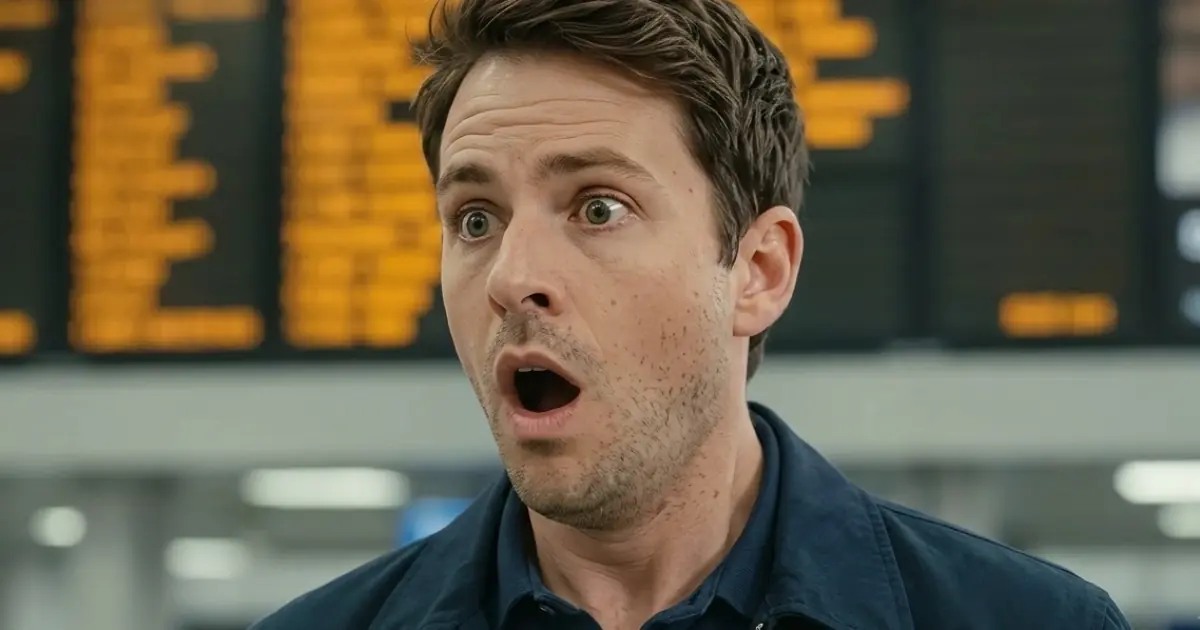
The departure board flickered above Terminal Four while Vivian Ashford stood beside her small silver suitcase, watching her son pretend he had not heard his girlfriend's last remark. At seventy-one, Vivian had learned that public humiliation rarely began with shouting. It began with somebody deciding her feelings were less important than everybody else's convenience.
Brielle Carter wore a pale pink jacket and carried a handbag that cost more than Vivian's first car. She had chosen the airport as the place to settle a disagreement that should have happened around a kitchen table. “We are not taking her with us,” she announced. “I'm not spending my honeymoon planning every stop around an old woman's knees.”
Noah Ashford looked between them. His suitcase stood behind Brielle's, and his boarding pass was still in his pocket. “It's not our honeymoon,” he said weakly. “It's a family visit. We discussed bringing Mom.”
“We discussed a holiday,” Brielle snapped. “We didn't discuss being her nurse.”
Vivian kept her shoulders square. The white jacket she wore had belonged to her sister, and the pearls around her neck were a gift from her late husband. She had dressed carefully because the journey mattered. They were traveling to Savannah for a ceremony honoring the families who had founded the city's community waterfront project. Vivian's husband had worked on that project before his death. Noah had promised to accompany her.
A woman in a wide-brimmed hat glanced toward them, then turned away. An airport employee slowed his steps. Vivian could sense the circle of embarrassment forming around her, but she would not ask strangers to settle a private argument.
“Brielle,” she said, “I can travel by myself. I have been doing it longer than you've been alive.”
Brielle laughed. “Then prove it. Don't make Noah choose between your memories and his future.”
The word choose was the cruelest part. Vivian looked at her son. He was thirty-two, a capable architect, admired at work, but in front of Brielle he sometimes became a boy searching for the answer that would stop an argument. He opened his mouth. Closed it. Watched the departures board instead.
Vivian understood his silence. She did not excuse it.
“Enjoy your journey,” she said. She took the handle of her suitcase and turned toward the quieter corridor beyond security. Behind her, Brielle said, “Finally.” Noah said nothing.
Halfway down the corridor Vivian stopped beside an empty information desk. Her hands were shaking. She allowed herself one full breath, then another. She took out her phone and called a number she had avoided for six years.
“Arthur? It's Vivian. I need the original trustees' records. Not copies. And I need you to freeze the proposed Harborline assignment until the board can review the signatures.”
The voice at the other end became serious. “Is something wrong?”
At the moment Vivian walked away, an announcement reminded passengers not to leave baggage unattended. Her own case held a change of clothes, an old photograph of Peter, a notebook of questions, and a gift she had wrapped for Noah: the fountain pen Peter carried during his first major project. She had intended to give it to him at the Savannah ceremony.
Vivian declined help with her case but asked for directions to a quiet seating area. The attendant walked with her anyway, keeping a respectful distance. They passed a family whose toddler had spilled crackers across the floor. The father knelt to gather them; the mother apologized to strangers. Vivian thought how readily people apologized for ordinary accidents and how stubbornly they avoided apologizing for deliberate cruelty.
She opened her notebook and wrote the words 'Keep the facts separate from the hurt.' The sentence was for herself. Brielle's insult wounded her, and Noah's silence wounded her more, but neither proved anything about the questioned assignment. She wanted the review to be fair even if the people involved had treated her unfairly. That distinction would determine whether her call protected the trust or merely satisfied her anger.
Before calling Arthur she listened to an old voicemail from Peter. It was not a profound message. He had asked whether she wanted him to buy oranges on his way home. She kept it because the ordinary sound of his voice made the years between them feel smaller. When it ended, she slipped the phone into her palm, straightened her jacket, and chose the number she needed.
“Yes,” Vivian answered. “But for the first time, I'm going to tell the truth without trying to protect everybody from it.”
## CHAPTER 2: THE HOUSE WITH TWO DOORS
The Ashford house had always had two doors. The front door faced the street and welcomed clients, neighbors, delivery drivers, and occasionally politicians who wanted photographs beside Vivian's husband. The back door opened into the kitchen and was reserved for anybody who needed a meal without an explanation.
Vivian's husband, Peter, designed buildings for a living, but he believed houses were judged by what happened inside them. Their son Noah grew up watching construction drawings cover the dining table and hearing visitors share their worries over soup. Peter often said that good design began by asking who might be excluded.