Chapter I: The Cathedral of Stifled Whispers
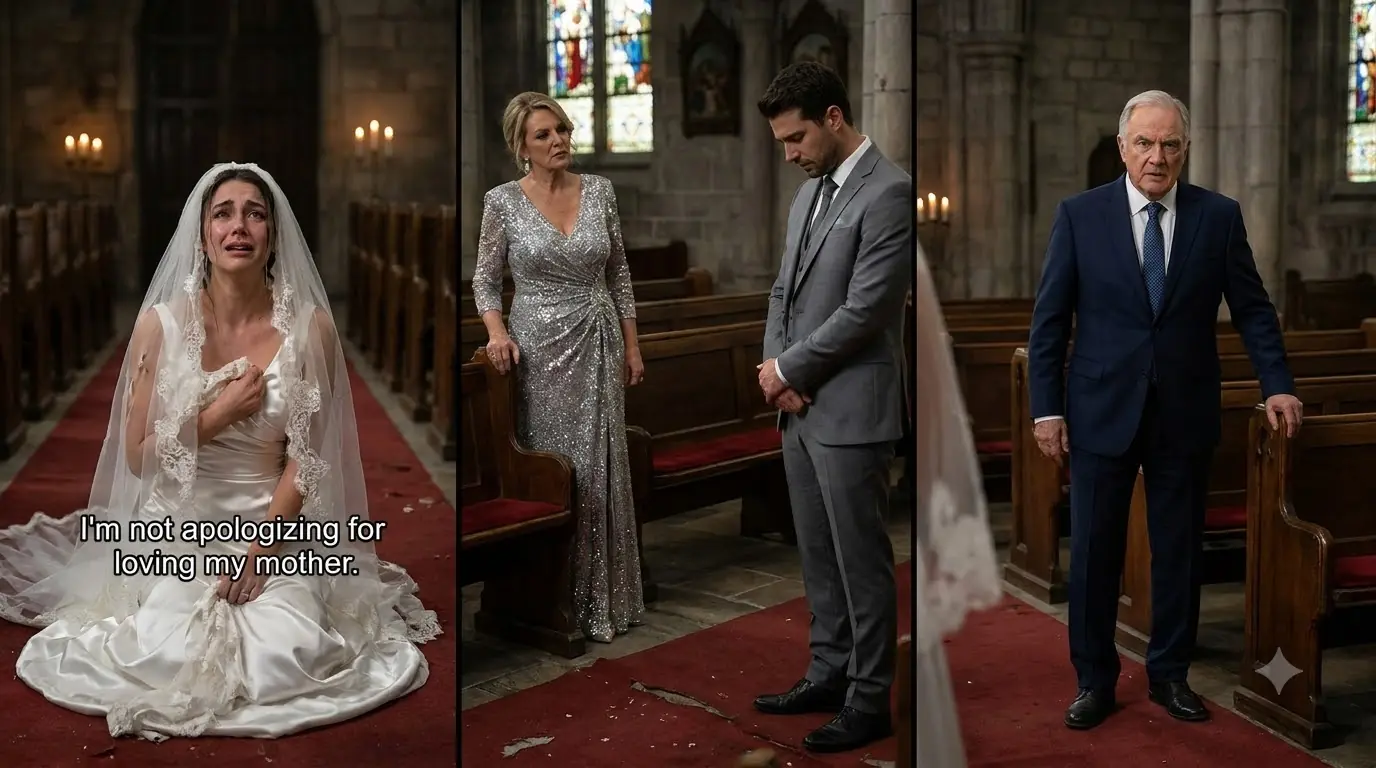
The vaulted arches of Saint Jude’s Cathedral rose high into the afternoon sky, its massive stained-glass windows fracturing the golden sunlight into sharp, kaleidoscopic beams of amber, crimson, and cobalt. Polished mahogany pews stretched in solemn, symmetrical lines toward the altar, adorned with cascades of ivory calla lilies and delicate sprays of baby’s breath. To an outside observer or a casual spectator peering through the heavy oak doors, the setting presented an idyllic, breathtaking tableau of high-society matrimonial grace. Every detail had been calculated with meticulous precision, radiating the effortless luxury and generational prestige of the Sterling family. of the Sterling family.
Yet beneath the cathedral’s vaulted grandeur hung a thick, suffocating tension that no fragrance of fresh lilies could mask. The pews were filled with prominent guests, corporate allies, and distant relatives, all dressed in bespoke morning suits and couture silk gowns. Their smiles were rehearsed, their conversations hushed into polite murmurs. In this rarified social sphere, weddings were seldom merely celebrations of genuine affection; they were public demonstrations of status, territorial mergers, and displays of family hierarchy. A subtle undercurrent of cold scrutiny flowed from row to row, with eyes darting toward the front of the sanctuary where the ceremonial proceeding had ground to an uncomfortable, freezing halt.
Emily stood near the center aisle, her delicate hands trembling slightly as she held the folds of her minimalist silk bridal gown. Unlike the heavy, jewel-encrusted dresses favored by women of the Sterling social circle, Emily’s gown was simple, tailored to honor quiet elegance and modesty. But the true centerpiece of her attire—the item that carried the entirety of her heart—was her veil. It was a masterpiece of gossamer-fine ivory tulle, edged with intricate, hand-stitched lace motifs depicting climbing jasmine blossoms. Every single stitch had been woven by her late mother during the grueling, quiet months of a terminal illness. Her mother had poured her fading eyesight and frail breaths into the lace, leaving behind a tangible mantle of maternal love and blessing to accompany Emily down the aisle when she could no longer walk beside her daughter.
Across from Emily stood Victoria Sterling, the groom's mother. Clad in an immaculate, shimmering silver-sequined evening dress complemented by a double strand of luminous pearls, Victoria held herself with the imperious, icy poise of a monarch accustomed to absolute obedience. She was a woman for whom bloodlines, wealth, and social dominance were the only valid currencies of human worth. To Victoria, Emily had always been an intolerable outsider—an ordinary woman of humble origins who had somehow captured the heart of her son and presumed to step into the Sterling lineage without an estate or an aristocratic surname. For months leading up to this wedding, Victoria had waged a war of passive aggression, seeking to dictate every floral arrangement, every seating placement, and every garment.
Beside Victoria sat Arthur Sterling, the family patriarch. Dressed in a tailored dark navy suit, his silver hair neatly combed back, Arthur sat in stony silence on the front pew. His weathered, aristocratic features were carved in severe lines, his gaze fixed impassively upon the altar. While Victoria ruled their domestic sphere with sharp venom and vocal authority, Arthur remained a man of few words, an enigma whose thoughts were buried beneath decades of corporate discipline and ancestral reserve.
Chapter II: The Calculated Demand
The disruption had not begun with a loud crash, but with a quiet, venomous demand uttered just before the vows were to be sealed.
During the pre-ceremony prayer, Victoria had stepped toward the altar under the guise of adjusting Emily's headpiece. Her manicured hands, adorned with heavy diamond rings, had not offered a mother's gentle blessing. Instead, she had leaned close to Emily's ear, whispering cold, humiliating barbs about Emily’s modest background, ridiculing the absence of a wealthy dowry, and demanding that after the ceremony, Emily sign a supplemental agreement renouncing any future claim to the Sterling family foundation.
Emily, despite her gentle disposition, had refused to bow her head in shame. She had looked Victoria in the eyes and calmly stated that she was marrying Julian out of love, not for corporate contracts, and that she would not allow her late mother's memory to be insulted on her wedding day.
That quiet defiance had struck Victoria like an open hand to the face. In Victoria's world, resistance from a social inferior was an unforgivable sacrilege. Her vanity curdled into explosive, predatory fury. Backing away from the altar, Victoria deliberately orchestrated a public dispute, feigning that the bride had whispered a vulgar, disrespectful remark toward her.
"How dare you speak to me with such insolence?!" Victoria’s voice had cracked across the nave, shattering the sacred silence of the sanctuary.
Guests had gasped, craning their necks. Whispers broke out among the pews like dry leaves catching fire. Julian, who had been waiting at the vestry steps, had come sprinting into the aisle, his gray morning suit creased with panic, his brow furrowed in anxious bewilderment.