Chapter I: The Sanctuary of Cold Pretense
The high vaulted ceiling of St. Jude’s Cathedral loomed like an ancient stone canopy, catching the muted afternoon sun through stained-glass windows depicting solemn saints and silent martyrs. Long shafts of crimson, cobalt, and amber light pierced the hushed interior, illuminating the polished mahogany pews, the white satin ribbons trailing along the center aisle, and the hundreds of invited guests seated in rigid, aristocratic decorum. This wedding had been hailed for months across metropolitan social columns as the union of the season—an immaculate alignment between modern corporate ambition and ancestral social stature.
Yet beneath the floral garlands of white gardenias and cascading baby's breath, the air inside the nave carried a stifling, clinical chill. Every decorative flourish, from the bespoke calligraphy on the silver-leaf programs to the coordinated pastel attire of the bridesmaids, had been engineered under the uncompromising surveillance of Victoria Vance. Victoria, mother of the groom, stood near the front altar steps like a sculpture of diamond and frost. At fifty-eight, she wore an opulent, floor-length silver gown woven with shimmering metallic sequins that caught every flicker of candlelight. Her blonde hair was sculpted into an immaculate, immovable updo, and a string of cultured South Sea pearls rested quietly against her collarbone. Victoria did not measure weddings by spiritual sanctity or the warmth of familial devotion; she measured them as public balance sheets of family prestige and unyielding dominance.
For months leading to this hour, Victoria had systematically erased every imprint of Emily’s humble origins. Emily, at twenty-five, was an accomplished textile conservator and artist whose delicate demeanor masked an iron core of quiet integrity. Unlike the generational heiresses who populated the groom’s social circle, Emily had known the biting reality of poverty, sacrifice, and long nights spent caring for an ailing parent. Her mother, Margaret, had worked two jobs as a seamstress to fund Emily’s education, pouring her love and diminishing eyesight into every hand-stitched hem before succumbing to a long, exhausting illness two winters ago. Margaret’s final gift to her daughter was a modest, hand-embroidered Brussels lace handkerchief—a delicate, fringed relic bearing stitched forget-me-nots, preserved by Margaret’s own grandmother and presented as a bridal talisman of unconditional maternal grace.
To Victoria, that humble scrap of handmade lace was an unbearable blemish. It did not match the six-figure, custom-embroidered French silk tulle veil commissioned exclusively from Paris; it whispered of thrift, hand-me-downs, and a lineage devoid of corporate trusts. Victoria had demanded, behind closed doors, that the heirloom be discarded in favor of diamond-encrusted couture pins. Emily had politely, firmly refused, carefully pinning the lace within the lining of her gown, right above her heart.
Now, as the church bells completed their solemn chiming, the calculated veneer of the grand ceremony was about to fracture under the sudden, unforgiving weight of exposed arrogance.
---
Chapter II: The Rupture at the Altar
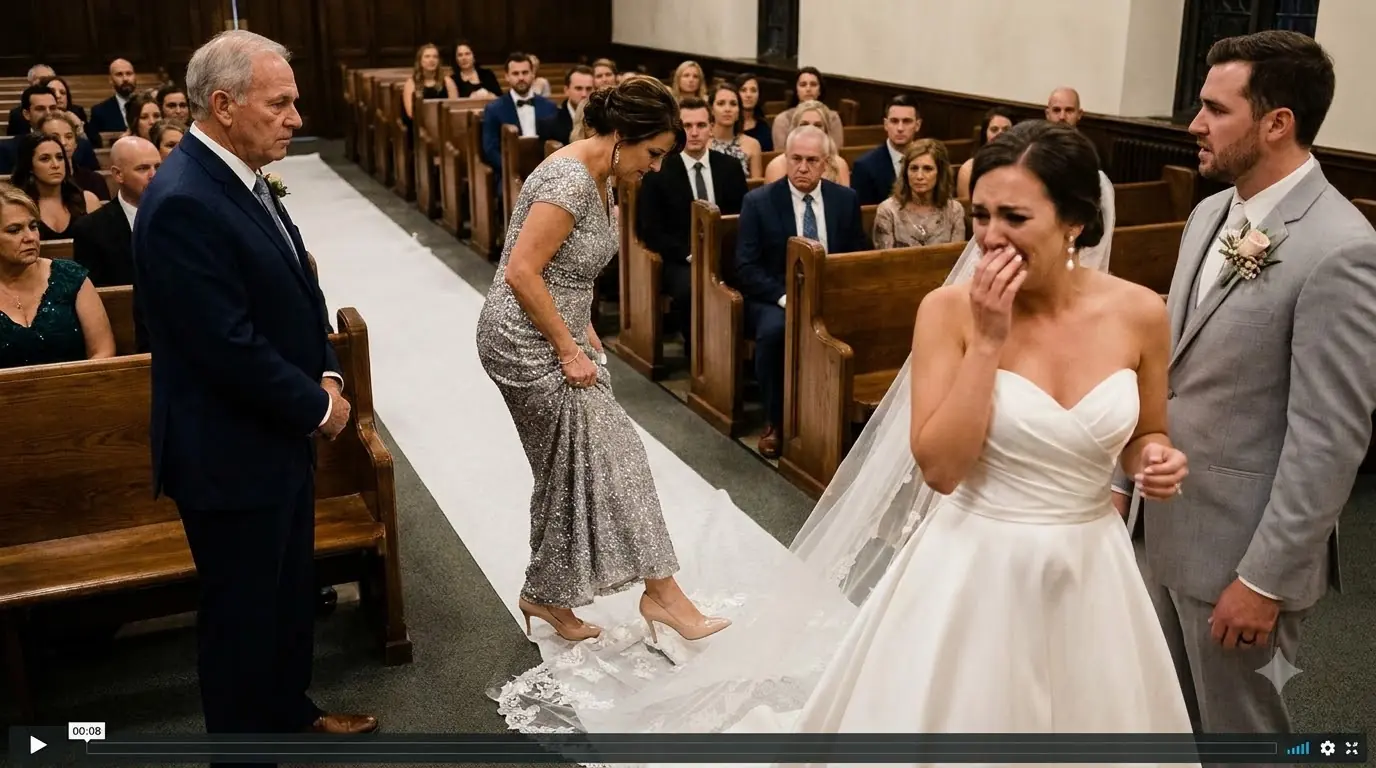
The processional had unfolded with clockwork perfection until the bridal party converged before the altar. As Emily reached the third marble step, her train arranged by the attendants, Victoria had leaned in under the pretense of adjusting the bride’s headpiece. With a swift, practiced twist of her manicured fingers, Victoria had deliberately tugged at the delicate lace heirloom concealed beneath the bridal veil, snapping its fragile thread and letting it flutter carelessly onto the polished stone floor, right beneath the groom’s polished leather shoe.
When Emily had gasped and bent down to rescue the precious cloth, Victoria had murmured a vicious, icy rebuke, audible to the front three rows: "Leave that filthy rag where it belongs, girl. A pauper’s scrap has no place before this altar. You will not drag down our name with your mother’s charity."
The insult, delivered with quiet venom on the most sacred day of her life, struck Emily like a physical blow. The memory of her mother’s calloused, trembling fingers stitching that lace while battling the chills of chemotherapy surged into Emily’s mind. For eight months, she had tolerated Victoria’s passive-aggressive slights, the patronizing comments about her wardrobe, and the humiliating demands for prenuptial concessions. She had absorbed them for Julian’s sake, believing his promises that once they were married, they would build a home rooted in mutual respect.
But the desecration of her dead mother’s memory was the boundary where love collided with conscience. Emily had stepped backward, refusing to offer her hand to the altar. The officiant had paused in stunned silence. The organ music had faltered and ground to a sudden, discordant halt.