THE ORPHANED ELEPHANT WHO REFUSED TO GIVE UP
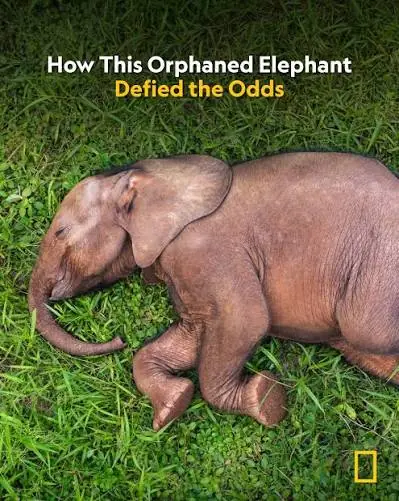
When an eight-month-old elephant was found wandering alone in a Nigerian rainforest, rescuers had no idea whether he would survive the night.
Today, Agbaibor is a symbol of resilience—and the people who saved him have learned that raising an orphaned elephant requires far more than simply keeping him fed.
1. He Was Found Completely Alone
The baby elephant was discovered near Okomu National Park in southern Nigeria, after a worker at a neighboring oil-palm plantation spotted him wandering without his herd.
Forest elephants normally live within family groups, making a young elephant alone an alarming sight.
Rangers spent days searching the surrounding rainforest for his family but couldn't locate them.
How Agbaibor became separated remains unknown. Conservationists suspect the herd may have been frightened away by human activity, including hunters and traps.
With no mother nearby, the young elephant faced a serious problem: he was only about eight months old and had not yet been weaned.
2. His First Days Were Extremely Dangerous
The rescue team had experience protecting wildlife from poaching and illegal logging—but caring for an elephant was completely new territory.
Agbaibor was transported in the back of a pickup truck to the ranger outpost.
Then his condition deteriorated.
He became weak, struggled to eat, and eventually tested positive for hypoglycemia, meaning his blood sugar was dangerously low.
Veterinarians were called in and treated him with intravenous fluids and dextrose while caregivers monitored his blood glucose closely.
For the rescuers, every hour mattered.
3. He Needed More Than Food
Keeping an orphaned elephant alive isn't simply about replacing its mother's milk.
Young elephants are social animals that normally have their mothers and other family members around them constantly.
So Agbaibor's caregivers had to provide both nutrition and companionship.
They developed a specialized feeding mixture using milk powder, coconut, cooked oats, and other ingredients while taking turns staying beside him around the clock.
At night, caregivers tucked the fragile elephant beneath a blanket to help keep him warm.
One ranger described the experience simply: nobody had expected to become an elephant parent.
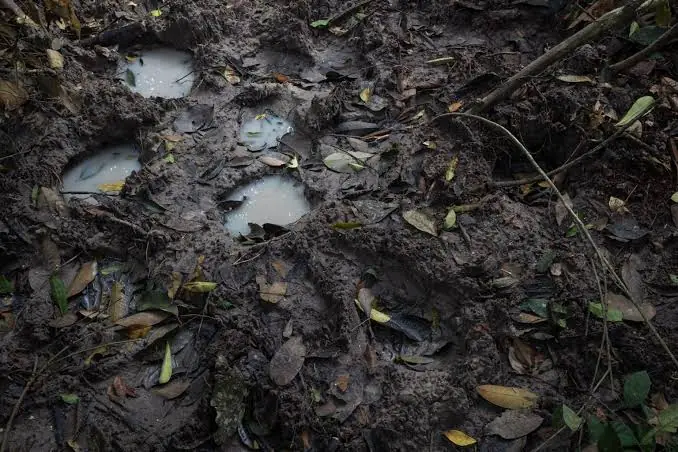 But suddenly, that was exactly what they had become.
4. Then Something Changed
After several difficult weeks, Agbaibor began eating more confidently.
He became stronger.
Then he became playful.
That change was significant.
Instead of lying weakly in his enclosure, he started exploring his surroundings and interacting with his caregivers.
That's when the team realized he might actually survive.
They finally gave him the name Agbaibor, an Ijaw word associated with bravery, strength, and survival.
The name fit.
5. The Tiny Survivor Became a Little Trouble-Maker
Today, Agbaibor is known for being playful—and occasionally mischievous.
One of his favorite activities is bathing himself with mud, using his trunk to throw it across his back to help cool down.
He also discovered something else: the water pipe in his enclosure.
Agbaibor quickly learned how to spray himself with it.
After repeatedly breaking the pipe, his caregivers eventually decided there was little point in fixing it every time.
His chief keeper, Joshua Aribasoye, had previously cared for domestic animals such as cows, goats, and dogs.
An elephant was an entirely different challenge.
He now works alongside four other caregivers and receives guidance from experienced elephant-care specialists.
A SMALL ELEPHANT WITH A BIGGER PURPOSE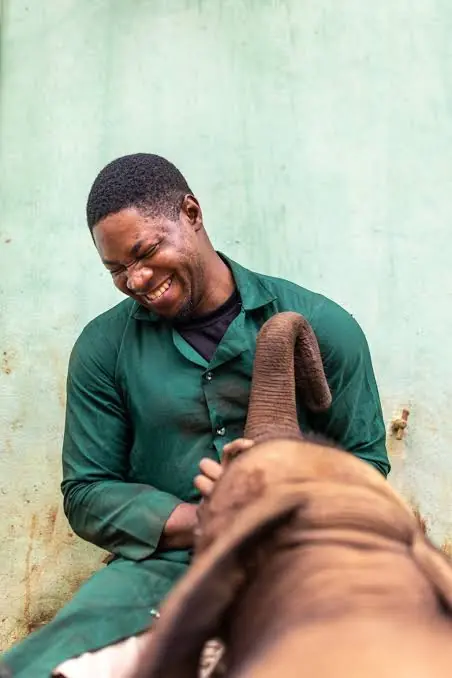
Agbaibor's survival represents more than one successful rescue.
African forest elephants are critically endangered, and their remaining habitat continues to face pressure from human activity.
Okomu National Park contains one of the remaining fragments of forest habitat where these elephants survive.
For the people caring for Agbaibor, the goal isn't simply to keep one elephant alive.
It's to give a young survivor the chance to grow, learn, and eventually become part of a future conservation story.
He arrived frightened, exhausted, and alone.
Now he plays with water, covers himself in mud, and keeps his caregivers constantly on their toes.
For an animal named “bravery,” “strength,” and “the survivor,” there may be no more fitting story.