THE UNBLINKING LENS: THE MEASURE OF TRUTH AND HONOR
CHAPTER I: THE GLASS CATHEDRAL OF AVARICE
The corporate headquarters of the Sovereign Horizon Financial Conglomerate rose eighty-four stories into the overcast sky, an imposing monolith of reinforced titanium, black obsidian glass, and architectural hubris. Within its cavernous central atrium, the air was conditioned to a sterile, perpetual sixty-eight degrees, carrying the faint, clinical perfume of industrial ozone and polished stone. Natural light flooded downward from a colossal glass skylight vaulted hundreds of feet overhead, washing over towering fluted pillars of imported Italian marble and reflecting off the mirror-finished Thassos floors with cold, mathematical precision.
This atrium was designed deliberately as an altar of intimidation. It was an environment constructed to communicate unassailable power, institutional immutability, and financial supremacy. In this high-altitude ecosystem of multi-billion-dollar syndications and corporate restructuring, human empathy was generally treated as an unacceptable balance-sheet liability. Image was not merely a personal preference; it was the ultimate collateral. Status was communicated through the cut of an English bespoke suit, the subtle weight of a platinum timepiece, and the unyielding posture of absolute moral invulnerability. To display hesitation, remorse, or physical vulnerability in these sunlit marble canyons was understood by the ambitious climbers as an immediate, irreversible forfeiture of authority.
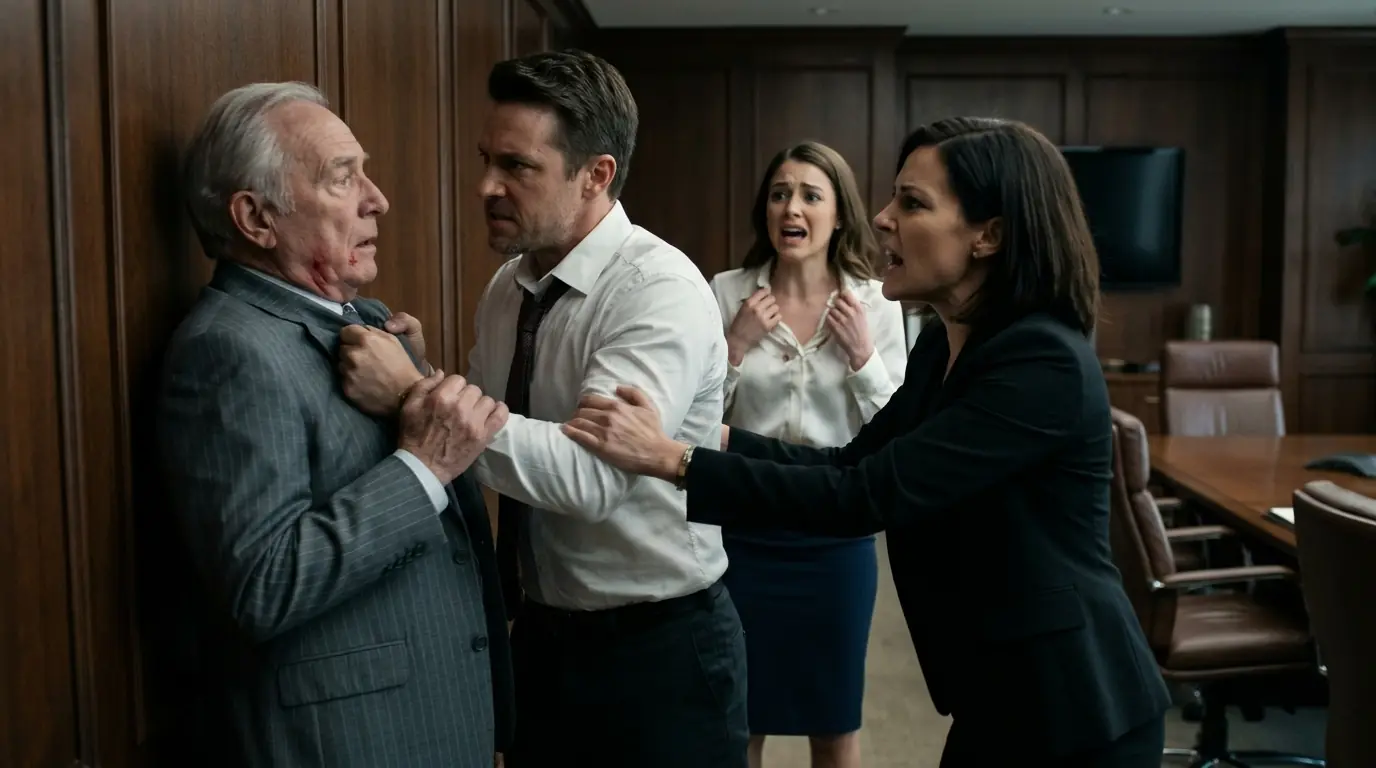
Arthur Vance moved across this grand stage with the slow, measured dignity of a man who belonged to an entirely different epoch. At sixty-eight years of age, Arthur wore a modest, impeccably pressed gray pinstriped wool suit, an unostentatious silk tie, and handmade oxfords that had been resoled more times than most junior associates had been alive. He was a founder of the original firm that had morphed over four decades into this global conglomerate, yet he had long since stepped back from operational micromanagement, preferring to act as a guardian of institutional ethics and senior board trustee.
His silver-white hair was trimmed with military precision, and deep, honest furrows lined his weathered forehead—marks earned from navigating global recessions, personal sacrifices, and forty years of corporate governance without ever sacrificing his personal integrity. Arthur walked with a slight, almost imperceptible stiffness in his hip, the souvenir of an old industrial accident from his youth, but his posture remained tall, his shoulders squared, and his pale blue eyes clear and unwavering.
To Arthur, the firm had never been a machine for personal enrichment; it had been built on a sacred compact of mutual trust, community responsibility, and the unbreakable bond of a man’s word. For weeks, however, an insidious infection had taken root in the corporation’s vital organs. A rogue faction within the executive branch had been quietly laundering high-risk collateralized debts through offshore shell entities, manipulating internal balance sheets to inflate stock options prior to an upcoming institutional merger. Arthur had spent the previous seventy-two hours sequestered in the subterranean document archives, personally auditing the handwritten ledger anomalies and cryptographic verification logs. In his leather attaché case, he carried the irrevocable proof of the fraud.
At the epicenter of this financial conspiracy was Julian Vance—Arthur’s only son—and Chloe Sterling, the firm’s ruthlessly ambitious Vice President of Global Investor Relations.
Chloe walked down the mezzanine corridor toward the executive bridge with the hurried, predatory rhythm of someone whose survival depended entirely on the manufactured narrative of perfection. She was thirty-one, stunningly composed in appearance, wearing an asymmetrical tailored silk blouse with sculpted shoulder cutaways paired with a high-waisted navy wool pencil skirt. Every strand of her dark hair was pinned with surgical symmetry, her lips painted in a sharp crimson that accentuated her cold, analytical smile.
Chloe did not merely participate in the corporate game; she weaponized its vanity. She had spent the last two years studying the psychological fractures of the Vance family, recognizing that Julian’s defining character defect was a toxic blend of deep-seated filial insecurity and explosive temper. By feeding Julian’s paranoia—convincing him that his father viewed him as an inadequate heir and sought to humiliate him before the board—Chloe had positioned herself as Julian’s indispensable confidante, lover, and co-conspirator.
Yet, this morning, the walls were closing in. Word had leaked from internal legal counsel that Arthur had uncovered the cryptographic discrepancy in the offshore accounts. The special board inquiry was scheduled for 2:00 PM. If Arthur walked into the executive boardroom with his dossier intact, the board would initiate an immediate forensic audit, terminating Chloe’s employment, voiding her equity packages, and sending her directly into federal indictment.
She needed an immediate, catastrophic disruption. She needed a scandal so personal, so violent, and so morally repulsive that Arthur Vance would be stripped of all credibility, discredited as an unstable predator, and removed from the premises in handcuffs before the market opened.
CHAPTER II: THE CORNER OF PERFIDY
The mezzanine crossover was a quieter wing of the tower, lined with warm walnut paneling that offered a deliberate acoustic contrast to the echoing stone atrium below. Large portraits of the founding partners hung between bronze sconces, their painted eyes looking down upon deep Persian runners that muffled the footsteps of passing executives.