Chapter I: The Fragile Splendor of the Grand Reception
The reception hall of the estate was an unapologetic cathedral of modern affluence, deliberately engineered to inspire submission in those who possessed less and performative admiration in those who possessed equal fortune. Suspended from the double-height tray ceiling, massive tiers of Bohemian crystal chandeliers refracted incandescent daylight into thousands of predatory shards, scattering diamonds across polished Calacatta marble that gleamed with sterile, unforgiving perfection. Fluted ionic columns, finished in custom cream lacquer and leafed in twenty-four-karat gold trim, stretched toward the mezzanine, framing expansive arched windows that offered an unbroken view of rolling private gardens and sculpted topiary. In this rarefied enclave, where fortunes were preserved through pretense and alliances forged through carefully calibrated smiles, appearance was not a superficial aesthetic choice; it was the sole recognized currency of existence.
Every guest who moved through the cavernous salons understood the invisible architecture of dominance. Silk neckties were knotted with mathematical symmetry; bespoke Italian tuxedos conformed ruthlessly to sculpted torsos; French haute-couture gowns swept across the stone like whispering waves of silk, velvet, and chiffon. Conversation was kept in a steady, modulated purr of polite condescension—a competitive exchange of stock options, real estate acquisitions in the Mediterranean, and exclusive charity gala sponsorships. To display fatigue, vulnerability, or moral hesitation in this mirrored paradise was regarded as an instantaneous forfeit of status. It was an ecosystem that bred vanity, fed upon insecurity, and rewarded the theatrical projection of untouchable superiority.
Adjoining the grand ballroom through a pair of tall mahogany pocket doors was the auxiliary service kitchen—a commercial expanse of brushed stainless steel, heavy granite prep islands, and commercial refrigeration designed to handle the logistical demands of a hundred-guest banquet. Yet, despite its utilitarian purpose, the kitchen retained an immaculate, clinical luster. Polished brass fixtures caught the harsh fluorescent illumination above, illuminating an endless procession of fine bone china, lead-crystal stemware, and heavy silver cutlery that awaited laundering between courses.
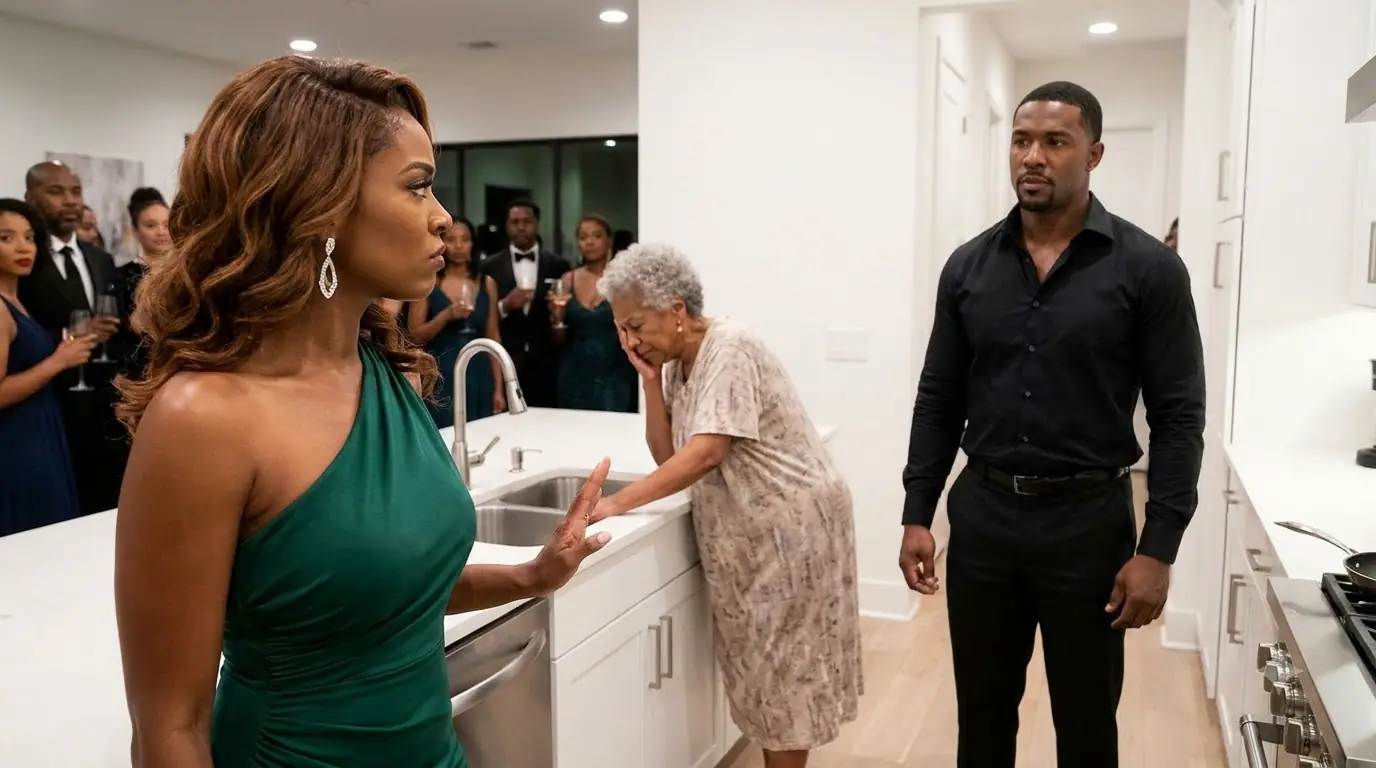
It was here, beside the deep stainless-steel triple basin, that Martha stood. At seventy-one years of age, Martha was entirely detached from the hollow pageantry unfolding on the other side of the mahogany doors. Her small, frail frame was draped in a faded, floral-printed cotton house dress that had been washed so many times its fabric had softened into a delicate, fragile muslin. Her hair, an untamed crown of tight silver-grey curls, framed a face etched deeply by decades of sacrificial labor, silent grief, and unyielding maternal devotion. Her knuckles, swollen and stiffened by severe rheumatoid arthritis, turned white as she submerged her trembling, water-wrinkled hands into the scalding, soapy basin, scrubbing heavy ceramic dinner plates with mechanical, patient endurance.
Martha had known a lifetime of backbreaking sacrifice. Decades before the sprawling estate, the imported luxury sports cars, and the private equity accounts had materialized, she had labored sixteen hours a day in commercial textile mills and late-night hospital sanitation wards to provide for her only son, Marcus. She had patched his school shoes with rubber cement, skipped meals so that his tuition could be paid on time, and endured the bitter cold of unheated basement flats so that he might one day rise into the light of executive success. For Martha, labor was neither an embarrassment nor a curse; it was the sacred, honest expression of an unbroken soul. Even as a persistent, dull ache radiated from her lower abdomen—the sinister, advancing symptom of an aggressive medical condition requiring imminent, complex surgical intervention—Martha refused to complain. She asked for no accolades, demanded no seat at the head of the banquet table, and sought only the quiet comfort of being near her son's happiness.
Yet, to the woman standing behind her, Martha's existence was nothing more than an offensive, unsightly stain upon an otherwise flawless portrait of high-society elegance.
Chapter II: The Hand of Cruelty and the Slap of Vanity
Chloe approached the kitchen threshold not with the measured grace of a refined hostess, but with the impatient, predatory stride of someone whose elevated social standing had been purchased entirely through manipulation and deceit. At twenty-eight, Chloe was undeniably arresting in the manner of an expensive, cold sculpture. On this evening, she wore a bespoke emerald-green satin evening gown designed with an architectural one-shoulder bodice, tailored so precisely to her contours that it shimmered like polished jade beneath the chandelier glow. A daring slit rose along the left seam, teasing the glitter of diamond-encrusted stilettos, while heavy teardrop chandelier earrings of platinum and certified diamonds brushed against her collarbone with every haughty tilt of her head.