Then he looked at me.
“Mrs. Johnson, this isn't a simple embezzlement case.”
“I know.”
“The money was transferred legally.”
“Then why did they tell everyone the church was struggling?”
He turned the deed around.
“Because this property wasn't purchased for personal use.”
My stomach tightened.
He explained that five years earlier, the neighborhood around New Hope had been targeted for redevelopment.
A major corporation wanted to buy the land surrounding the church.
The congregation had rejected the offer.
Pastor Cole secretly created the foundation and moved the church's reserve money into it.
Then the foundation bought several neighboring properties.
The plan was to protect the church from being forced out.
There was only one problem.
The congregation had never approved it.
And worse, the church's bylaws required members to vote before transferring more than $50,000 outside the church.
My attorney found another document.
A meeting authorization.
It claimed the congregation had unanimously approved the transfers.
The date was printed clearly.
Sunday, July 14, 2019.
I knew exactly where I had been that Sunday.
I had been sitting at the front desk counting the morning offering.
There had been no meeting.
No vote.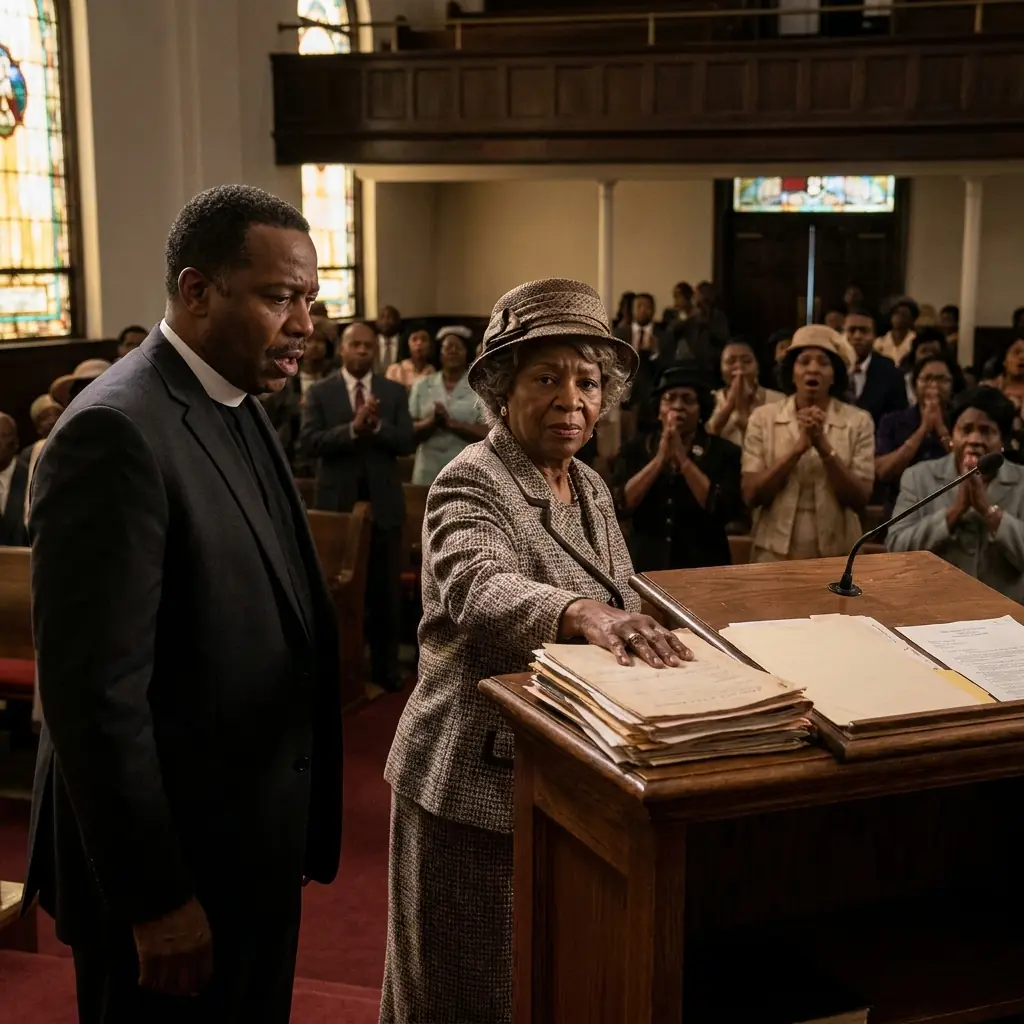
No authorization.
The document was fabricated.
The money hadn't been stolen.
It had been secretly used to buy the neighborhood around the church—without the congregation's knowledge.
That evening, I walked into Sunday service.
Pastor Cole stopped speaking when he saw me.
I placed the deed on the pulpit.
“I wasn't confused,” I said.
The sanctuary went silent.
“I was keeping records.”
Three months later, Pastor Cole resigned.
The properties were transferred legally back to New Hope.
And the congregation voted to create an independent financial committee.
As for me?
They offered me another certificate.
This time, I refused it.
“I don't need a certificate,” I said.
“I need you to remember one thing.”
“Never confuse obedience with trust.”