Not hiding.
Not trapped.
Not waiting for rescue.
She was living in a small town several hours away, working at a community center and helping teenagers who had nowhere else to go.
When Walter saw her, he couldn't move.
Emily was thirty years old now.
Her hair was shorter. There were faint lines around her eyes. She looked nothing like the sixteen-year-old girl in his photograph.
And yet Walter knew her immediately.
Emily looked at him for a long moment.
Then she whispered,
“You kept the seat.”
Walter nodded.
“Every day.”
She looked down.
“I knew.”
Walter's eyes filled with tears.
“Why didn't you come home?”
Emily took a slow breath.
“Because I was scared.”
She explained everything.
Fourteen years earlier, she had discovered that several teenagers were being moved between schools under false records. When she tried to tell an adult, someone warned her that her family could be endangered.
She ran.
At first, she planned to return.
But after discovering how easily official records could be changed, she became terrified that coming home would expose Walter too.
So she disappeared.
Over the years, she built a new life.
She made mistakes.
She trusted the wrong people.
She learned how to survive.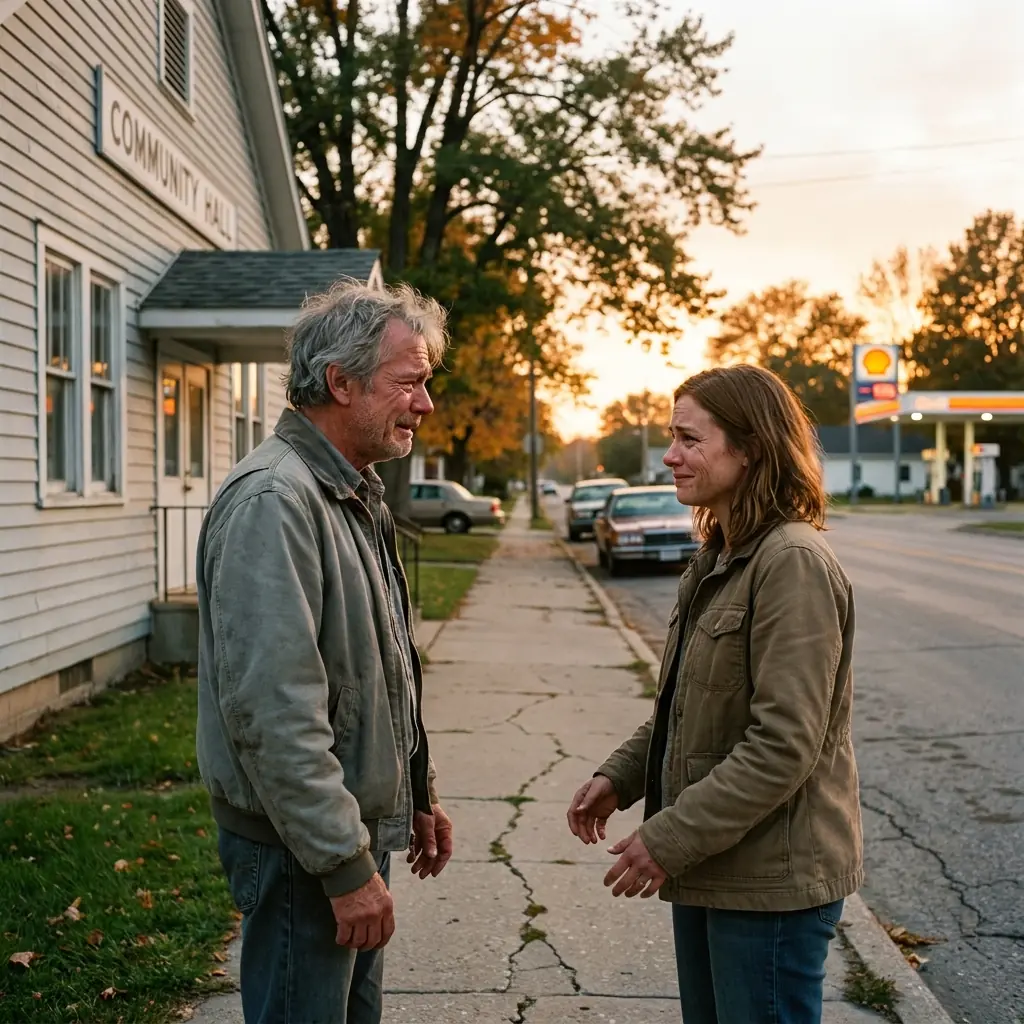
And eventually, she began helping other teenagers who felt invisible.
Walter listened without interrupting.
Then he said the hardest thing he'd ever said.
“I spent fourteen years thinking I failed because I couldn't bring you home.”
Emily looked at him.
“You didn't fail because you couldn't find me.”
She paused.
“You would have failed if you found me and refused to let me choose what came next.”
Walter broke down.
The investigation that followed exposed the falsified records and corruption surrounding the old transportation network. Several officials were charged, and the system that had allowed missing teenagers to disappear from public records was dismantled.
But Walter never considered himself a hero.
He simply went back to driving Bus 18.
Except now, Seat Twenty-Seven was no longer reserved.
One morning, a nervous new student climbed onto the bus.
She looked down the aisle.
Walter smiled and pointed toward the empty seat.
“You can sit there.”
She smiled.
“Are you sure?”
Walter glanced at the mirror.
“Yes.”
Then he started the bus.
For fourteen years, Walter had kept that seat empty because he was afraid the world had forgotten Emily.
Now he left it open for someone else.
Not because he was waiting for the past to return.
But because he had finally learned what Emily had spent fourteen years teaching him:
Sometimes loving someone means leaving a seat open—not keeping them in it.