CURIOUS BEAR VISITS FIRE CAMP, REMINDING CREWS THAT WILDLIFE IS ALSO FLEEING THE FLAMES
A curious bear recently gave firefighters working near Fish Lake an unexpected reminder: when wildfire destroys an animal's habitat, displaced wildlife may suddenly appear in places where people normally wouldn't expect to see them.
The bear approached a medical transportation vehicle near the Little Giant Fire, briefly investigating the area before moving on.
For the firefighters and incident crews working in the region, the encounter was more than an unusual wildlife sighting.
It was a warning.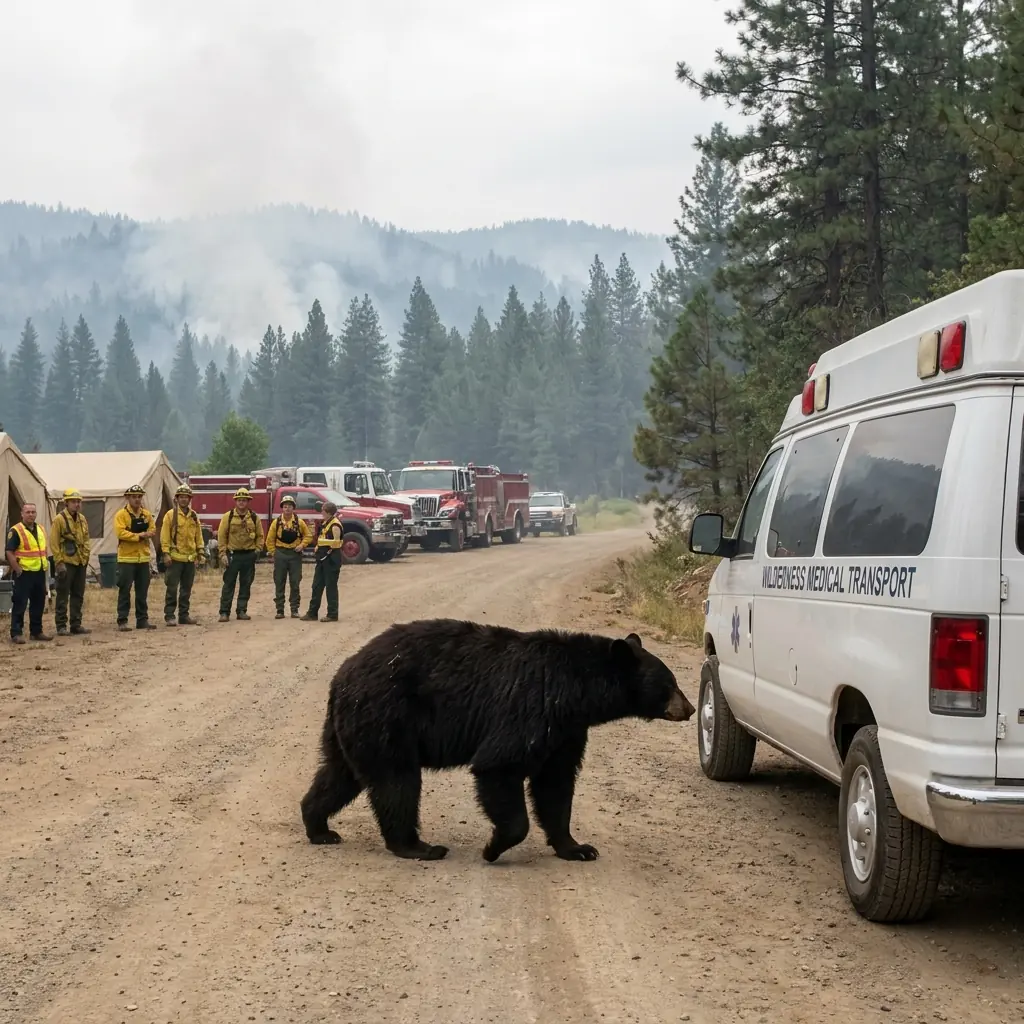
Wild animals affected by wildfires may be forced away from familiar feeding grounds and shelter as flames, smoke, heat, and human activity transform their normal environment. As they search for food and safer territory, they can come closer to roads, camps, equipment, and populated areas.
And that can create a dangerous situation for both animals and people.
🐻 THE BEAR WAS CURIOUS — BUT THAT DOESN'T MEAN IT WAS SAFE
Seeing a bear wandering near a work area may seem harmless, especially when the animal appears calm.
But wildlife experts and firefighters emphasize that bears are still wild animals.
A bear that discovers food around people can quickly learn that campsites, vehicles, garbage containers, and buildings are potential sources of an easy meal.
That behavior can become a serious problem.
Once an animal begins associating humans with food, it may become increasingly comfortable approaching people.
And a bear that is no longer afraid of humans can be much more unpredictable.
That's why crews working around the Little Giant Fire are taking precautions to make their camps less attractive to wildlife.
🚒 FIREFIGHTERS ARE REMOVING THE “INVITATIONS”
One of the simplest ways to discourage wildlife encounters is also one of the most important:
Don't give animals a reason to come back.
Firefighters and incident personnel are making an effort to keep work areas clean, remove trash quickly, and eliminate potential food sources.
Even something that seems insignificant to a person can attract an animal with a powerful sense of smell.
Food scraps.
Garbage.
Leftover meals.
Improperly stored supplies.
All of them can become an invitation.
According to Blaine Dohman, a paramedic assigned to the Little Giant Fire and captain with Clark-Cowlitz Fire Rescue, crews have been doing a good job keeping trash picked up and removing temptations that could encourage wildlife encounters.
The goal isn't simply to protect firefighters.
It's also to protect the animals.
🔥 WILDFIRE DOESN'T JUST DESTROY TREES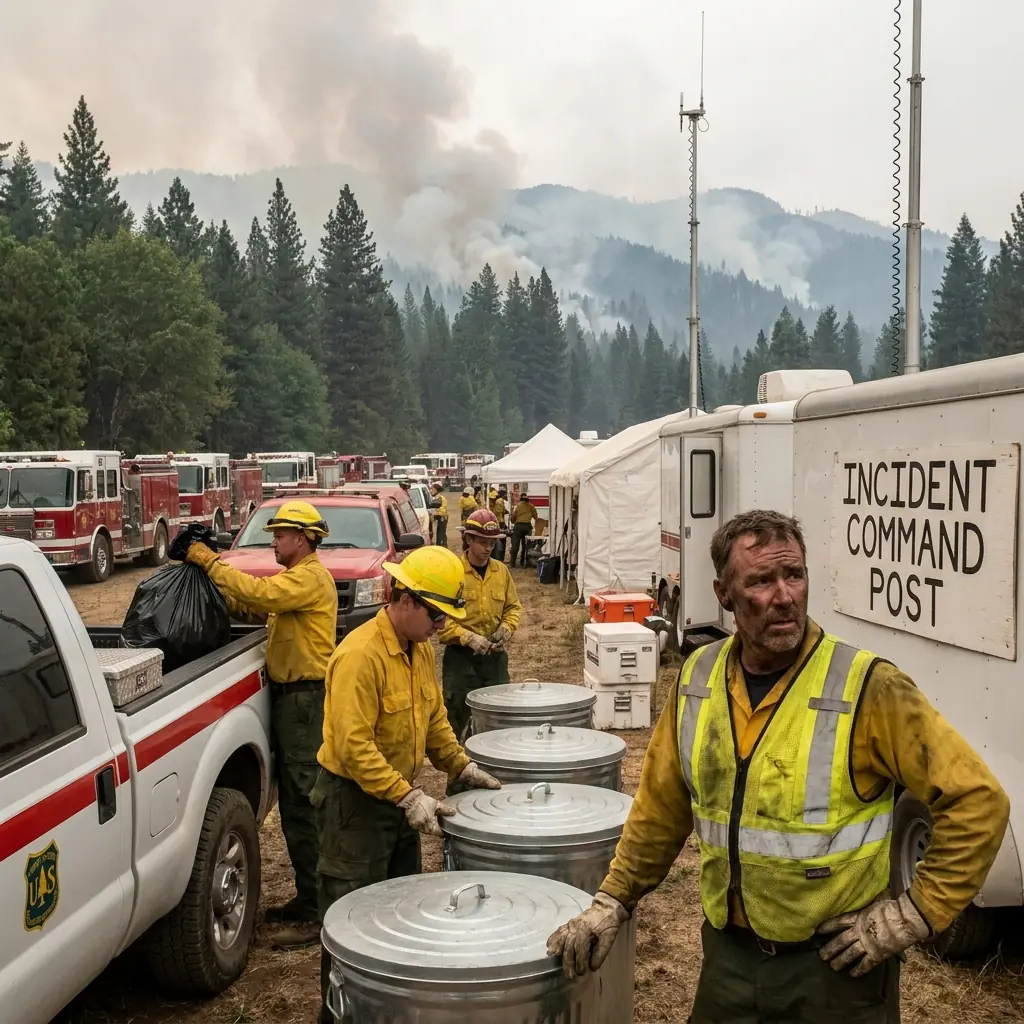
When people think about wildfire damage, they often picture burned forests, destroyed buildings, and thick clouds of smoke.
But another story is unfolding beyond what humans can immediately see.
Wild animals may lose nesting areas, dens, water sources, feeding grounds, and familiar travel routes.
Some flee ahead of the flames.
Others remain nearby and attempt to move through unfamiliar territory.
That can bring wildlife into unexpected contact with humans.
For animals such as bears, this creates an especially complicated situation.
A bear searching for food after its normal habitat has been disrupted may encounter a busy fire camp for the first time.
What looks like a curious visit could actually be an animal trying to survive in a rapidly changing environment.
⚠️ WHAT SHOULD PEOPLE DO IF THEY SEE A BEAR?
The safest response is simple:
Give the animal space.
Don't approach it.
Don't attempt to feed it.
Don't try to photograph it from close range.
And never assume that a calm-looking bear is harmless.
People in wildfire-affected areas should also secure food, garbage, and other items that could attract wildlife.
If a bear repeatedly enters an occupied area, local wildlife authorities or trained personnel should handle the situation.
Trying to chase or confront the animal can make the encounter more dangerous.
🌲 A REMINDER FROM THE FIRE ZONE
The bear near Fish Lake may have provided firefighters with an unexpected moment of excitement, but its appearance also highlighted something easy to forget during a major wildfire.
People aren't the only ones trying to escape the disaster.
Wild animals are navigating the same changing landscape, searching for food, shelter, and safety.
For firefighters, that means fighting the flames isn't the only challenge.
They also have to share the landscape with animals whose homes may have been destroyed or disrupted.
The best solution is not to eliminate every wildlife encounter.
It's to prevent those encounters from becoming dangerous.
Keep food secured.
Keep camps clean.
Keep your distance.
And most importantly, let wild animals remain wild.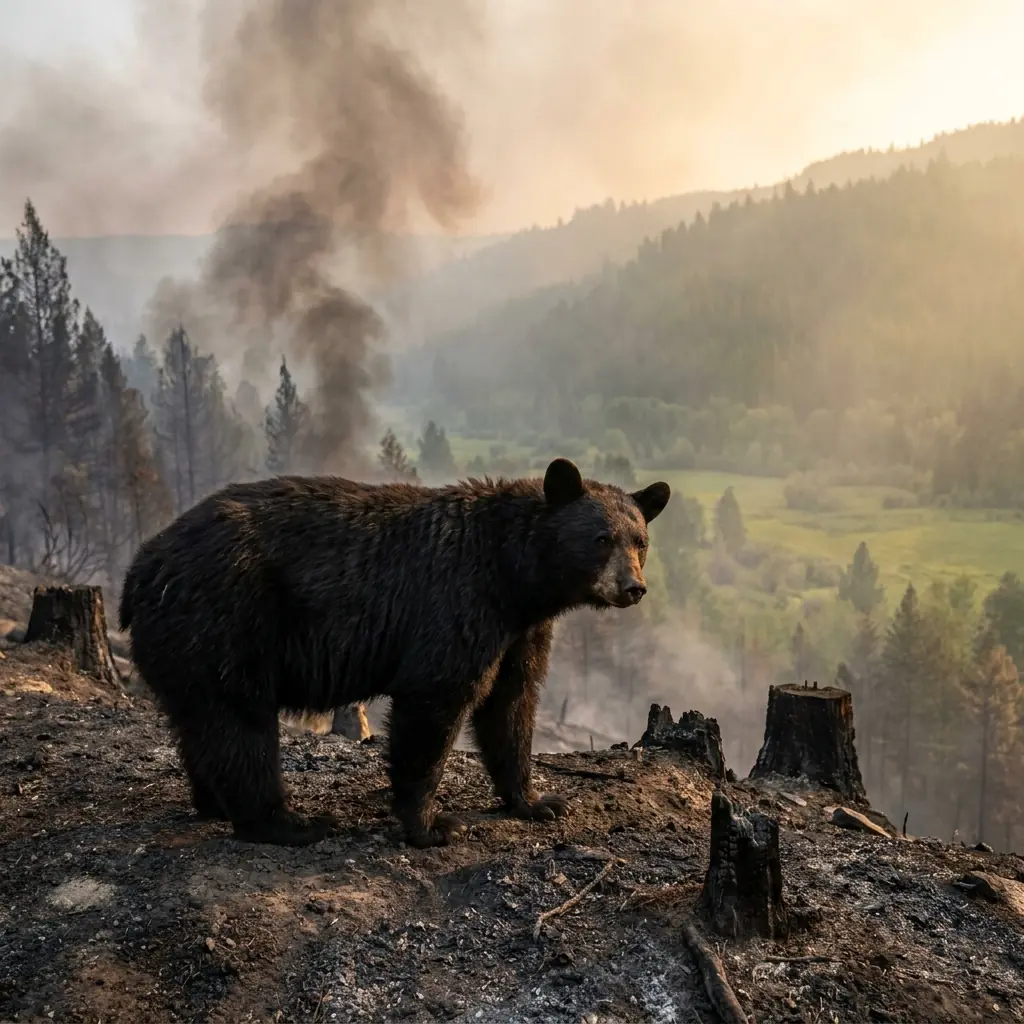
Because behind every unexpected bear sighting in a fire zone may be a much bigger story:
an animal simply trying to find its way home.