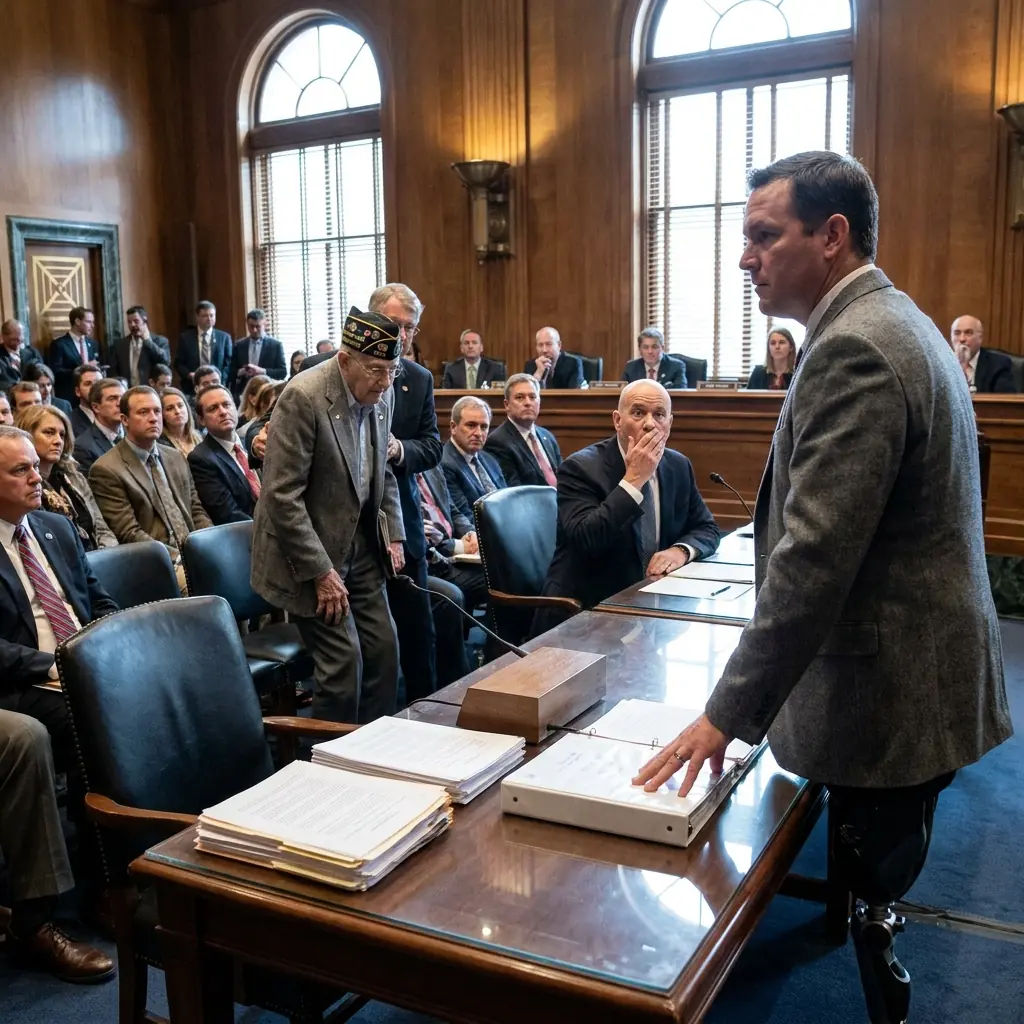
The same man whose name appeared on the transfer log.
Daniel could have made the hearing about Keller.
Instead, he made it about the records.
He presented the 2006 decision.
Then the transfer log.
Then the inventory showing the file had been received.
Then the handwritten note.
Finally, he presented the original accident report.
A certified copy had been found in an archived military database.
The evidence was complete.
The record had never been imaginary.
It had been moved.
Keller finally stood.
"I don't remember this file," he said.
Daniel looked at him.
"I believe you."
Everyone turned.
Daniel continued.
"Because that's the problem. Nobody remembers the files. But the paperwork does."
Then he pulled out one final document.
Frank Miller's statement.
The false date Daniel had signed in 2011.
Daniel admitted exactly what he had done.
He didn't excuse it.
He didn't blame Frank.
He didn't ask anyone to forgive him.
"I put my name on something I knew wasn't true," Daniel said. "And Frank paid for it."
Frank lowered his head.
Then something unexpected happened.
Frank stood.
"I want the record corrected," he said.
"But I don't want Daniel punished for telling the truth now."
The room went completely quiet.
The hearing officer ordered a full review of Daniel's service connection.
Weeks later, the decision arrived.
The severance was withdrawn.
Daniel's original service connection remained intact.
His benefits were restored.
But that wasn't the victory he remembered.
The bigger victory came months later when Frank's claim was reopened using the same transfer records Daniel had uncovered.
Frank finally received the review he had been waiting seventeen years for.
Daniel kept his father's green notebook.
He added one sentence beneath the old rule:
If it isn't in the book, find who moved it.
He never got all his lost money back.
He never got back the twenty-three months spent chasing paper.
But every Saturday morning, veterans still gathered around that folding table.
Forms.
Stamps.
Copies.
Names.
Voices.
Daniel learned something his father never taught him:
Sometimes the truth doesn't arrive dramatically.
Sometimes it arrives in an envelope.
With a stamp.
A date.
A signature.
And one line proving that someone, somewhere, touched the truth before claiming it never existed.