5 SIMPLE BREAKFAST TIPS THAT CAN MAKE YOUR MORNING MEAL HEALTHIER 🍳

Breakfast doesn't have to be perfect to be healthy. You don't need expensive superfoods, complicated recipes, or a strict diet plan to improve the way you start your day.
In fact, a few small changes to your usual breakfast can make your meal more balanced, satisfying, and easier to maintain as part of a healthy lifestyle.
If your typical morning starts with coffee and a pastry—or sometimes nothing at all—these 5 simple tips may be worth trying.
1. START YOUR MORNING WITH PROTEIN 🥚
One of the easiest ways to make breakfast more satisfying is to include a source of protein.
Eggs, Greek yogurt, cottage cheese, milk, tofu, beans, and lean meats can all contribute protein to a morning meal.
Protein is an essential nutrient that your body needs to build and maintain muscles and other tissues. Including it in breakfast can also make the meal feel more substantial.
For example, instead of having only toast and coffee, you could add an egg or some Greek yogurt.
You don't need an enormous serving. The goal is simply to make protein a regular part of your meal.
2. DON'T FORGET FIBER 🌾
Fiber is another important part of a balanced breakfast.
Foods such as oatmeal, whole-grain bread, berries, apples, bananas, chia seeds, and other fruits can provide dietary fiber.
Fiber can help support digestive health and may also help you feel fuller after eating.
Try swapping highly refined breakfast foods for more fiber-rich options when possible.
For example, oatmeal topped with fruit can be a simple alternative to a heavily sweetened breakfast pastry.
The important thing is consistency—not perfection.
3. BE CAREFUL WITH ADDED SUGAR ☕
Some breakfast foods appear harmless but can contain significant amounts of added sugar.
Sweetened cereals, flavored coffee drinks, pastries, syrups, and some flavored yogurts can contribute substantial amounts of added sugar to your daily diet.
You don't have to eliminate sweet foods completely.
Instead, look for simple ways to reduce how much added sugar you consume. Choose unsweetened coffee more often, compare nutrition labels, or add fresh fruit for natural sweetness.
A small change to your morning drink can sometimes make a surprisingly large difference over time.
4. ADD A FRUIT OR VEGETABLE 🍓
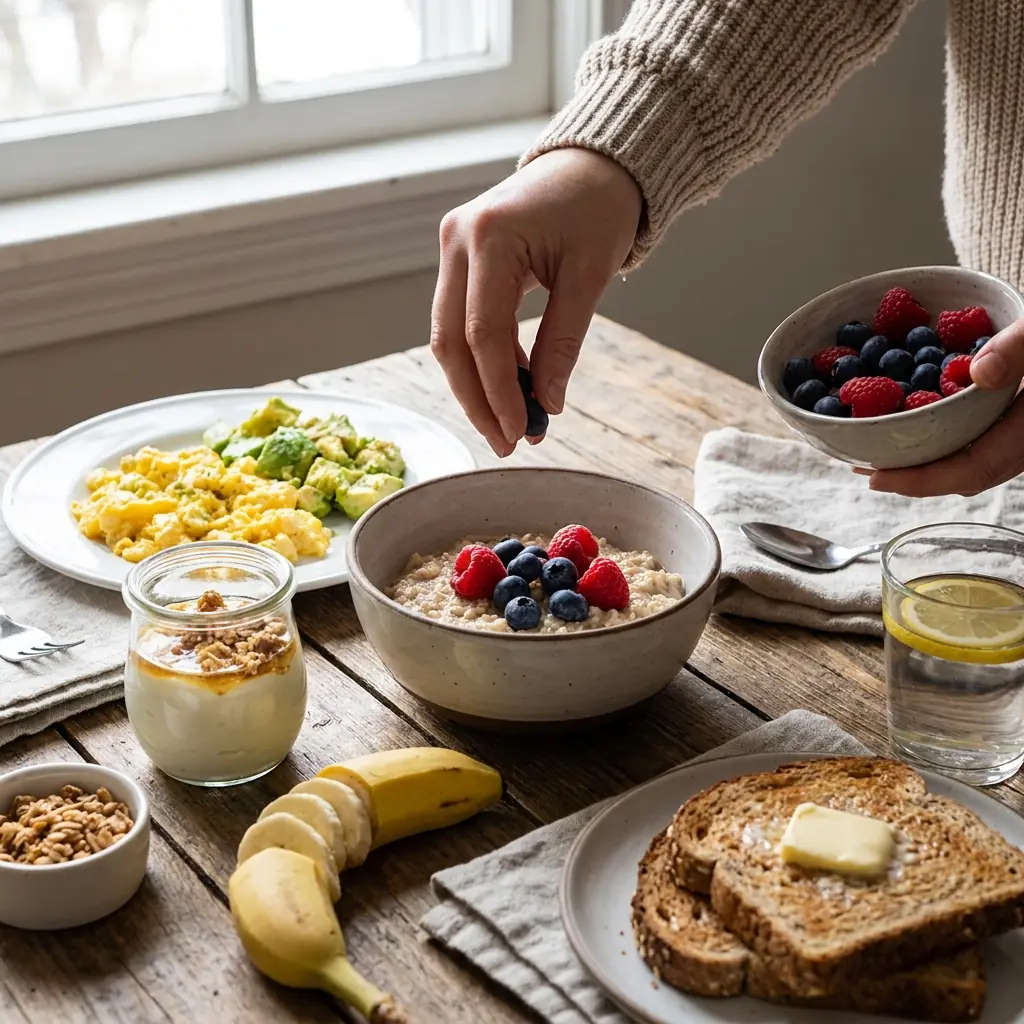 Breakfast is an easy opportunity to add more fruits or vegetables to your day.
Bananas, berries, oranges, apples, tomatoes, spinach, mushrooms, and peppers can all fit into different types of breakfast.
You could add berries to oatmeal, sliced banana to whole-grain toast, spinach to scrambled eggs, or tomatoes alongside an omelet.
These foods provide vitamins, minerals, fiber, and other nutrients.
And you don't need to buy expensive exotic produce.
Something as simple as a banana or an apple can be a convenient addition to your morning meal.
5. DON'T LET YOUR BREAKFAST BECOME TOO LARGE
A healthy breakfast isn't necessarily a huge breakfast.
Portion sizes still matter, particularly when several calorie-dense foods are combined.
For example, a breakfast containing a large pastry, sugary coffee, processed meat, cheese, and a large serving of fried potatoes can quickly become much more calorie-dense than expected.
That doesn't mean these foods are forbidden.
Instead, think about balance.
A moderate portion of protein, a fiber-rich carbohydrate, some fruit or vegetables, and a low-sugar beverage can create a satisfying meal without making breakfast unnecessarily heavy.
And if you're genuinely not hungry in the morning, you don't necessarily need to force yourself to eat immediately. People's hunger patterns vary.
A healthier breakfast doesn't require a complete lifestyle transformation.
Start with small changes: add protein, choose more fiber, reduce added sugar, include fruit or vegetables, and pay attention to portions.
Most importantly, choose foods you actually enjoy and can realistically eat on a regular basis.
There is no single “perfect” breakfast for everyone. Your nutritional needs can vary depending on your age, activity level, health conditions, medications, and overall diet.
The goal isn't to make every breakfast flawless.
It's to make your everyday choices a little better—one morning at a time. 🍳