CHAPTER 1 — THE FOODS HIDING ON YOUR PLATE
Every day, millions of people sit down for breakfast, lunch, and dinner believing they are making normal food choices. But behind some familiar products are ingredients that have caused controversy around the world.
From colorful cereals to processed meats, certain substances used in American food production have been restricted or banned in other countries because of safety concerns.
One shocking example is farm-raised salmon.
While salmon is considered a healthy choice, some experts have raised concerns about farming conditions, chemical exposure, and differences between farmed and wild fish. The fish may be given synthetic additives to create the pink color consumers expect.
Then there is ractopamine, a growth-enhancing drug used in livestock production. It helps animals develop more lean muscle, but countries including China, Russia, and many others have banned it due to concerns about possible health effects.
Another controversial food is genetically modified papaya. Created to resist viruses that threatened crops, GMO papaya became a major agricultural success in Hawaii. However, concerns about genetically modified foods continue to divide scientists and consumers worldwide.
The biggest question remains:
Are these foods safe innovations—or hidden risks on our everyday plates?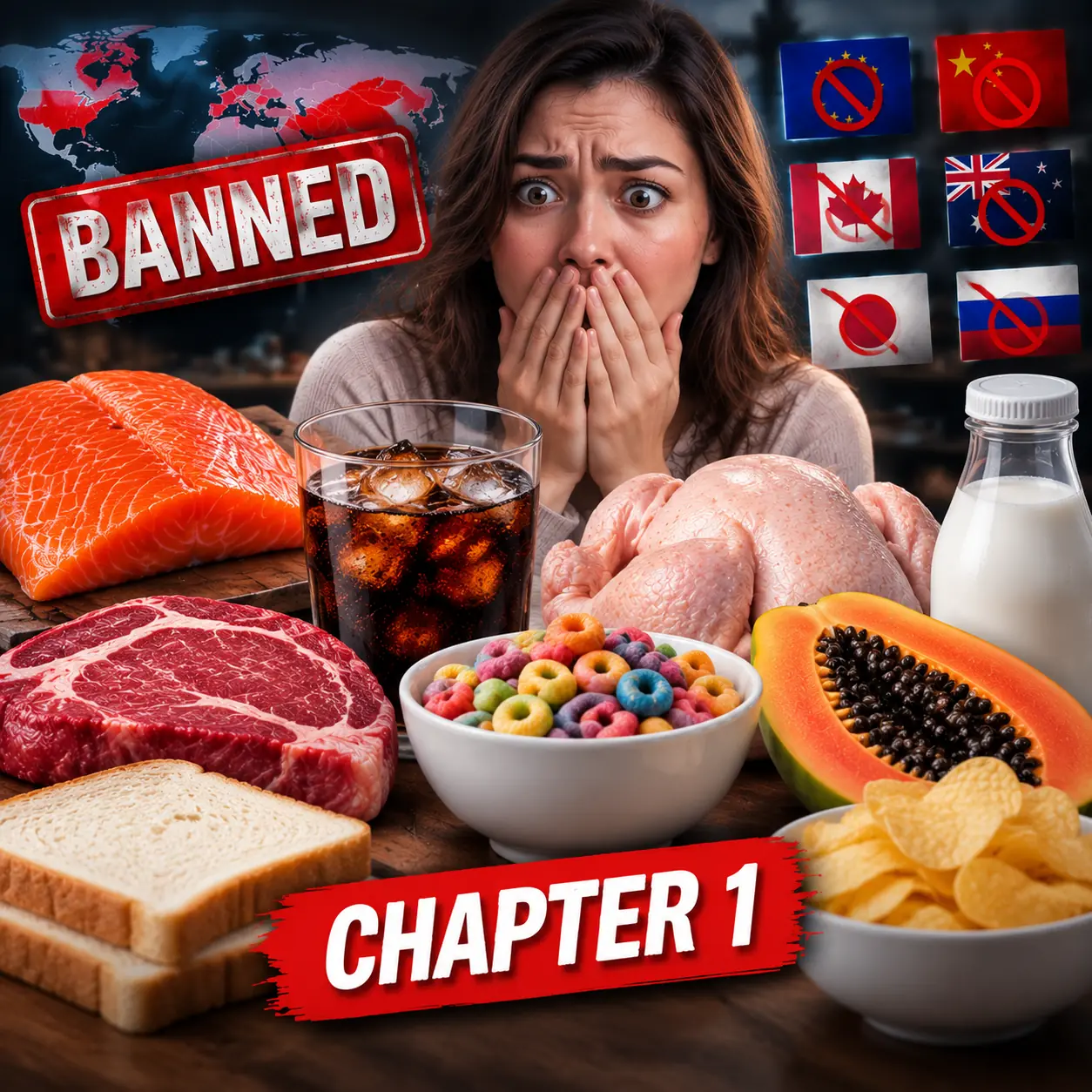
CHAPTER 2 — THE INGREDIENTS MOST PEOPLE NEVER NOTICE
The most surprising discoveries often come from foods people consume without thinking.
For decades, some American drinks contained brominated vegetable oil (BVO), an ingredient originally developed with chemical properties similar to flame retardants. Critics argued that long-term exposure could create health concerns, leading several countries to restrict its use.
Then there are artificial food dyes.
Bright red candies, colorful cereals, and popular snacks often contain synthetic colors such as Red 40, Yellow 5, and Yellow 6. While these ingredients remain common in the United States, some countries require warnings or have banned certain dyes due to concerns about allergies and possible effects on children’s behavior.
Even everyday bread has faced controversy.
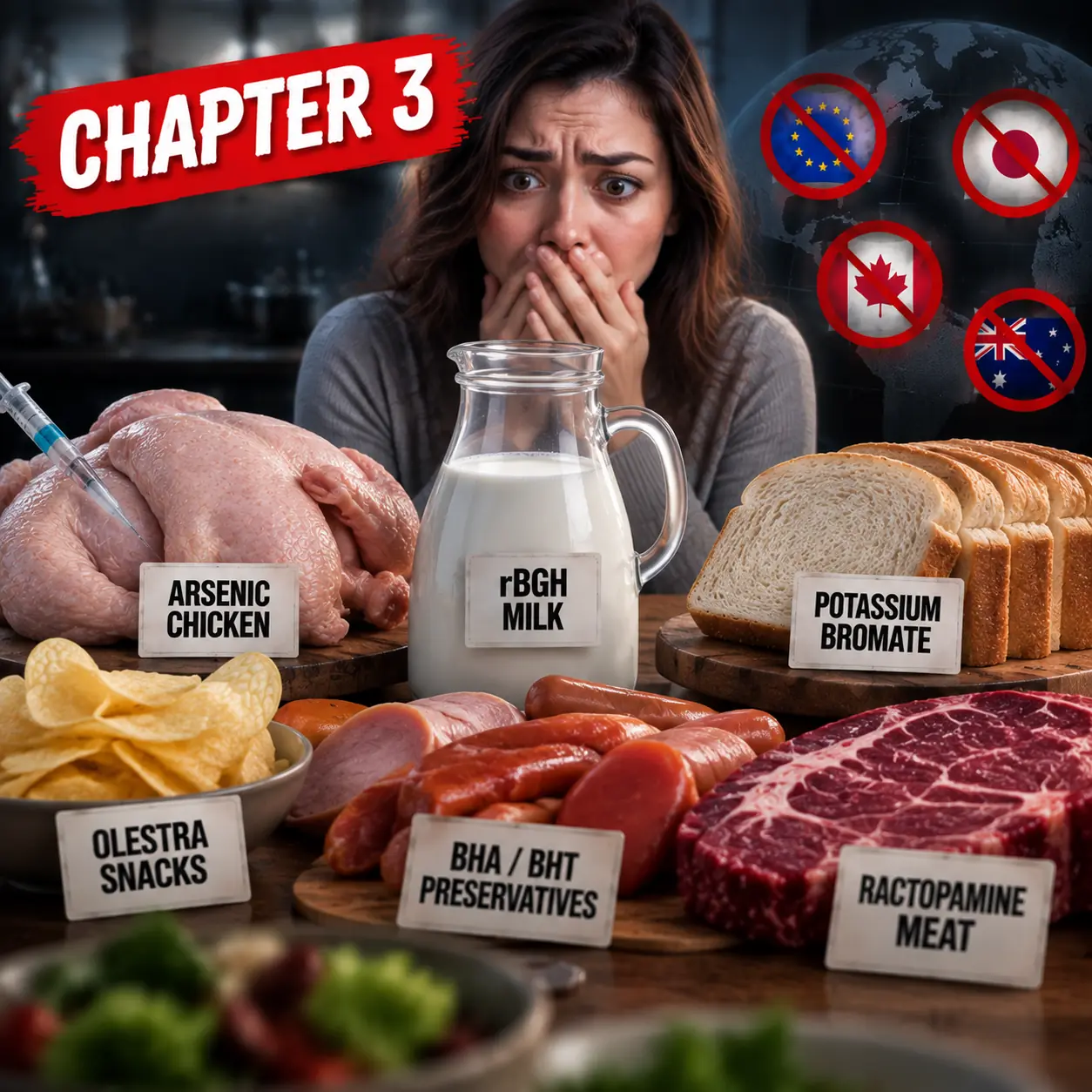
Potassium bromate, a dough-strengthening ingredient used by some commercial bakeries, has been restricted in several countries because studies have linked high exposure levels to potential health risks.
And what about “fat-free” snacks?
Olestra, a fat substitute once promoted as a healthier alternative, became famous after consumers reported digestive problems. Although approved for use, it became a reminder that removing one problem does not always create a perfect solution.
Behind every label is a story.
And sometimes, the smallest ingredient can create the biggest debate.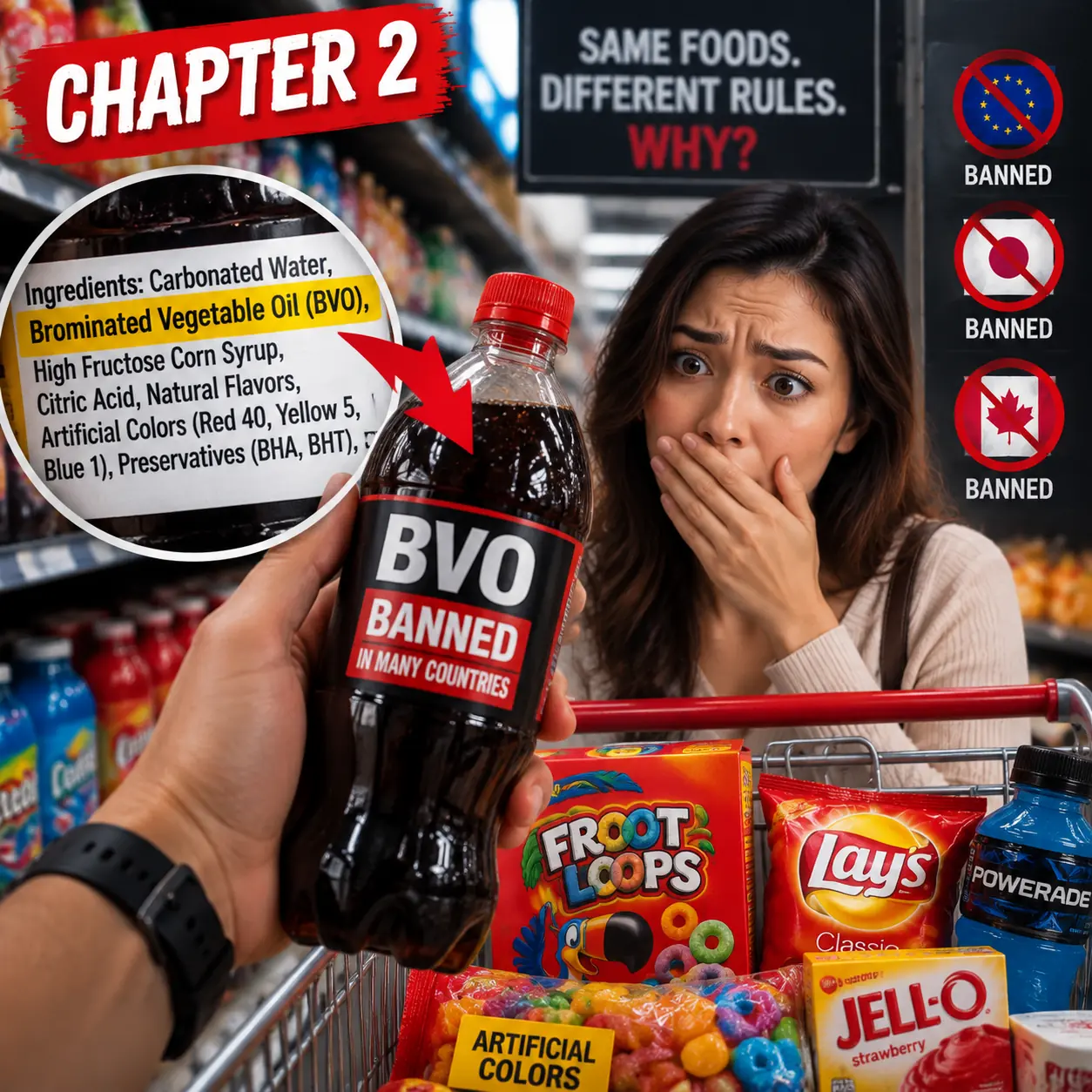
CHAPTER 3 — THE FINAL WARNING ON YOUR DINNER TABLE
The last group of controversial foods reveals how complicated modern food production has become.
BHA and BHT, preservatives used to keep foods fresh longer, remain controversial because some studies have raised concerns about possible health effects. They can be found in products ranging from cereals to processed foods.
Another surprising example is chicken.
For decades, some poultry producers used arsenic-based compounds to improve animal growth and appearance. Although regulations have changed over time, the history of arsenic use in farming shocked many consumers.
Perhaps one of the most debated examples is dairy.
Synthetic growth hormone rBGH was developed to increase milk production in cows. While approved in the United States, it has faced opposition internationally, with several countries banning its use due to concerns about animal welfare and possible human health impacts.
So what should consumers do?
The answer is not panic.
Food science is complicated, and regulations differ from country to country. But one lesson remains clear:
Knowing what is inside your food gives you the power to make better choices.
Because the biggest danger isn't always what we eat.
Sometimes, it is what we never knew was there.