Part 1: An Unexpected Arrival
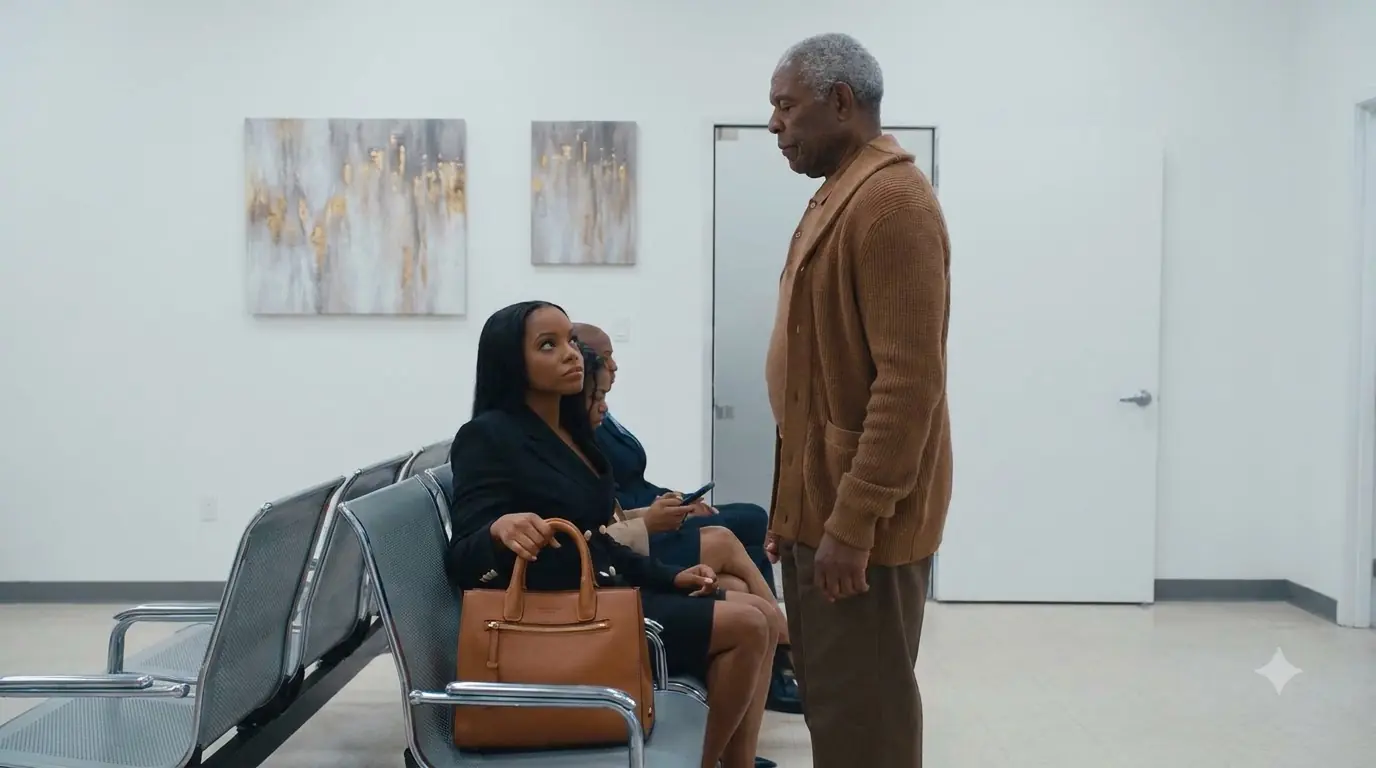
The room was filled with quiet conversations when the old man walked through the door.
Nobody paid much attention to him at first.
He wore a simple brown cardigan over a matching shirt and dark trousers. His gray hair was neatly combed, and his steps were slow but steady. There was nothing particularly remarkable about his appearance. He carried no expensive briefcase, wore no designer watch, and displayed none of the confidence that usually accompanied people who considered themselves important.
To most of the people sitting inside the room, he looked like an ordinary elderly man who had perhaps entered the wrong meeting.
But he had not.
He knew exactly where he was going.
And he knew exactly why he had come.
At the front of the room, several young professionals sat in carefully arranged chairs. They had been invited to attend what was described as an important evaluation meeting. Each had been told that the gathering could determine the direction of their future careers.
Among them was a young woman named Amara Bennett.
Amara sat with her back straight, her hands resting lightly on the handle of her tan leather handbag. She wore a perfectly tailored black suit, and her long dark hair fell neatly around her shoulders. Everything about her appearance suggested preparation, ambition, and discipline.
She had spent the previous evening reviewing documents, rehearsing answers, and preparing for the questions she expected to face.
This opportunity meant everything to her.
For nearly three years, she had worked tirelessly to establish herself in a competitive professional world. She had accepted difficult assignments, stayed late when others went home, and sacrificed weekends to prove that she deserved a place at the table.
She had not come this far to be overlooked.
Sitting a few chairs away was another candidate, a young man named Daniel Carter.
Daniel was dressed in an elegant navy-blue suit with a crisp white shirt. His shoes were polished, his hair carefully styled, and his expression carried the quiet confidence of someone who had never seriously doubted his ability to succeed.
He had grown up surrounded by opportunities. His family had connections in influential circles, and he had attended prestigious schools where success seemed almost guaranteed.
Daniel was intelligent, certainly. He knew how to speak convincingly and how to make people feel that he belonged in any room he entered.
But he also had a habit of judging others too quickly.
He noticed Amara's expensive-looking handbag and assumed she came from a comfortable background. He noticed the confidence in her posture and decided she was probably another ambitious professional who believed she was better than everyone else.
He had made similar assumptions about the other candidates.
To Daniel, the meeting was not simply an opportunity to demonstrate his abilities.
It was a competition he expected to win.
Behind him, a few other participants exchanged nervous glances. Some whispered to one another, while others studied their notes.
The atmosphere was formal, almost intimidating.
Then the elderly man entered.
His arrival caused a small disturbance as he walked between the rows of chairs. A few people glanced up. Someone moved a handbag out of his way. Another participant briefly looked toward the door, wondering whether the old man was supposed to be there.
Amara noticed him immediately.
She watched as he walked slowly toward the front of the room.
There was something unusual about his expression.
He did not appear confused. He was not searching for anyone or looking around for directions. His eyes moved calmly across the room, observing the people seated before him.
He seemed to know every detail of the place.
When he reached the center aisle, he paused.
For a moment, his eyes settled on Amara.
She instinctively straightened.
The old man looked at her for several seconds, his expression difficult to read. There was no obvious smile, no sign of recognition, but something in his gaze made her feel that he was seeing more than the polished exterior she had carefully presented.
Amara offered him a polite smile.
He did not return it.
Instead, he continued walking.
Daniel noticed the interaction and leaned slightly toward the person beside him.
"Is he part of the staff?" he whispered.
The other candidate shrugged.
"I have no idea."
Daniel looked at the old man's cardigan and then at his own expensive watch.
"He probably works in the building," he murmured.
The comment was quiet, but not quiet enough.
Amara heard it.
She turned her head toward Daniel.
"Does it matter?" she asked.
Daniel raised his eyebrows.
"I was just asking."
"Then perhaps you should wait until someone answers."
He gave her a dismissive smile and returned his attention to the front.
Amara turned away, choosing not to waste her energy on an unnecessary argument.
She had learned something important over the years: not every person who underestimated you deserved an explanation.
Sometimes the best response was to allow time to reveal the truth.
The elderly man finally stopped near the front of the room.
A few people looked toward him expectantly.
Nobody introduced him.
Nobody explained why he was there.
He simply stood in silence.
For several seconds, the room became increasingly uncomfortable.
A woman seated near the wall adjusted her jacket. Someone cleared their throat. Daniel glanced toward the entrance, apparently expecting an official representative to arrive and explain the situation.
Then the door opened again.
A woman wearing a sophisticated blue suit entered behind the elderly man.
Her name was Evelyn Brooks.
She was one of the most respected executives in the organization, known for her direct manner and her ability to make difficult decisions without allowing personal feelings to interfere.
Unlike the elderly man, Evelyn's appearance immediately attracted attention.
Several participants recognized her.
Daniel sat straighter.
Amara's eyes widened slightly.
She knew who Evelyn was. Everyone who had researched the organization knew her name.
Evelyn had spent more than twenty years building its reputation. She had overseen major projects, negotiated international partnerships, and helped transform a struggling institution into one of the most respected organizations in its field.