A Deaf Girl Slid a Desperate Note Across the Diner Counter — But When the Gray-Bearded Biker Saw What Her Hands Were Saying, He Ordered Every Door Locked.
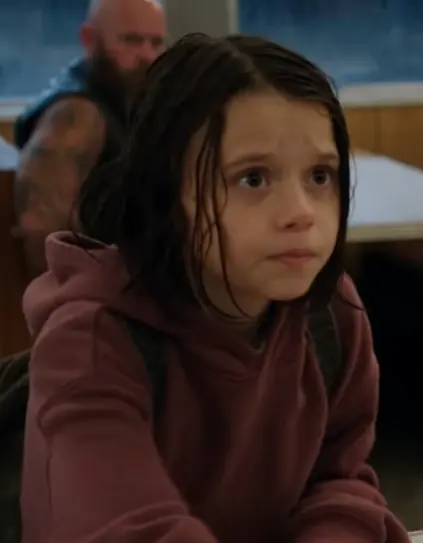
A Deaf Girl Slid a Desperate Note Across the Diner Counter — But When the Gray-Bearded Biker Saw What Her Hands Were Saying, He Ordered Every Door Locked.
Maya slid the small note across the diner counter.
The manager barely looked at it before pushing it back.
“Speak up or leave.”
Maya flinched.
Her hands moved quickly, desperately trying to explain.
“I don’t understand that,” he snapped. “Go home, kid.”
Maya shook her head and pointed toward the dark parking lot.
“Wait.”
A massive gray-bearded biker rose from a nearby booth.
Cole Mercer was fifty-six, broad-shouldered and weathered, with tattooed forearms, heavy black boots, and a worn leather vest carrying the silver wolf emblem of the Iron Wolves.
At first glance, he looked like the last person a frightened thirteen-year-old girl would approach for help.
But Cole wasn’t looking at Maya’s clothes.
Or the rainwater dripping from her hair.
Or the fact that she hadn’t spoken a word.
He was watching her hands.
For a moment, he said nothing.
Then he raised his own.
Are you lost?
Maya froze.
Her eyes widened.
For the first time that night, someone understood her.
She quickly signed back.
No.
Then she pointed outside.
Cole glanced through the rain-streaked diner window.
A handful of vehicles sat beneath the yellow parking-lot lights.
Two pickups.
An old sedan.
Four motorcycles belonging to Cole and the other Iron Wolves.
And farther away, beneath a flickering lamp, a dark pickup sat with its engine running.
Cole looked back at Maya.
His hands moved again.
What happened?
Maya swallowed.
Her fingers trembled so badly that Cole gently signed:
Slow down. I’m watching.
She took a breath.
Then began again.
The manager couldn’t understand a single movement.
But Cole could.
And whatever Maya told him erased every trace of calm from his face.
“What did she say?” the manager asked.
Cole looked through the diner window.
Then toward Donna, the waitress standing behind the coffee machine.
“Lock the front door.”
Donna hesitated.
“Cole?”
“Now.”
The deadbolt clicked.
The three bikers sitting in Cole’s booth slowly stood.
Nobody shouted.
Nobody threatened anyone.
They simply stopped eating and started paying attention.
Big Mason Boone, a shaved-headed mechanic built like a refrigerator, walked toward the window.
“That truck?”
Cole nodded.
The manager frowned.
“What’s going on?”
Cole turned back toward Maya.
Who is he?
Her hands moved.
My mother’s boyfriend.
Cole waited.
Why are you afraid of him?
Maya looked toward the floor.
Then signed:
My mom told him not to come near me anymore.
Cole’s expression hardened.
Why?
Maya touched her own wrist.
A faint red mark circled the skin.
Cole noticed immediately.
His jaw tightened.
The manager stepped closer.
“Would somebody please explain what’s happening?”
Cole spoke without taking his eyes off Maya.
“She says the man outside isn’t supposed to pick her up.”
The manager gave an uneasy laugh.
“Maybe it’s a family misunderstanding.”
Cole looked at him.
“A scared kid just walked through a rainstorm to get away from him.”
That ended the conversation.
Maya signed again.
Cole watched carefully.
Her mother, Rachel, worked evening shifts at a nursing home across town. Her boyfriend, Travis Hale, had been living with them for almost a year.
At first he had been kind.
Helpful.
He repaired the kitchen faucet.
Picked up groceries.
Drove Maya to school when Rachel had early shifts.
But slowly, things changed.
He became angry when Rachel worked overtime.
Angry when Maya didn’t respond quickly enough.
Angry when he thought people were ignoring him.
Maya was deaf and preferred American Sign Language. She could make some sounds, but speech had never been comfortable for her.
Travis hated that.
He refused to learn more than a few signs.
When Maya tried communicating with him, he often waved her hands away.
“Use your words.”
As if the language she already had somehow didn’t count.
The night before, Rachel finally told Travis to leave.
He had taken her phone and smashed it against the kitchen wall.
Maya had been standing in the hallway when it happened.
Rachel stepped between them and told Travis he was done.
He left.
Before Maya went to school that morning, her mother made her promise something.
If Travis appeared—
don’t get into his truck.
Don’t argue.
Don’t go home alone.
Find an adult.
Find a store.
Find somewhere public.
And ask for help.
That afternoon, Travis was waiting two blocks from Maya’s school.
He followed her slowly.
Window down.
“Maya, get in.”
She kept walking.
He drove beside her.
“Maya.”
She sped up.
He pulled ahead and stopped.
When she tried passing, he climbed out and grabbed her wrist.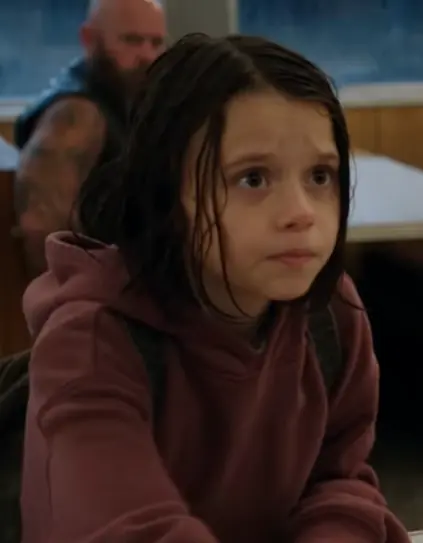
Maya twisted away.
Then ran.
She didn’t know where she was going.
Only away.
Eventually she saw the red neon sign of Miller’s Roadside Diner through the rain.
She thought a crowded restaurant meant safety.
Then the manager told her to speak up or leave.
Until Cole stood.
Cole looked toward the pickup.
The driver’s door opened.
A man in his late thirties stepped out.
Dark jacket.
Work boots.
Rain running off his hair.
Maya immediately moved behind Cole.
Travis crossed the parking lot quickly.
He reached the diner door.
Pulled.
Locked.
He saw Maya through the glass.
“Maya!”
She flinched.
Travis knocked harder.
“Maya, open the door.”
Nobody moved.
Then he noticed Cole.
“What are you doing?”
Cole stepped closer to the glass.
Travis pointed at Maya.
“That’s my girlfriend’s daughter.”
Cole nodded once.
“Her mother know you’re here?”
Travis’s expression shifted.
“That’s none of your business.”
“Then we can wait until she gets here.”
Travis laughed without humor.
“She’s a kid. She doesn’t know what she wants.”
Cole turned toward Maya.
His hands moved.
Do you want to go with him?
Maya answered immediately.
No.
Cole faced the door again.
“She seems pretty clear.”
Travis’s face reddened.
“She can’t even talk.”
Maya saw the words on his lips.
Her shoulders sank.
Cole saw that too.
Something changed in him.
Not anger exactly.
Something older.
Colder.
He turned toward Maya and signed:
Look at me.
She did.
There is nothing wrong with the way you speak.
Maya stared at him.
Then her eyes filled with tears.
Travis hit the glass.
“This is ridiculous!”
Cole turned back.
“The only communication problem in this diner is people refusing to listen.”
Big Mason quietly smiled behind him.
Donna picked up the phone.
“I’m calling the sheriff.”
Travis heard her.
His expression changed.
He backed away from the door.
Then pointed at Maya.
“This isn’t over.”
Cole didn’t threaten him.
He simply answered:
“It is for tonight.”
Travis returned to his truck.
But he didn’t leave.
He sat behind the wheel.
Engine running.
Watching.
Cole crouched beside Maya again.
She signed:
Why do you know ASL?
The question caught him off guard.
For the first time since standing up, the enormous biker looked uncertain.
He looked toward the photograph tucked inside his vest.
Then answered.
My daughter was deaf.
Maya’s expression softened.
Was?
Cole nodded.
Emily Mercer had been born profoundly deaf.
When she was two, doctors explained what she might never hear.
Cole remembered staring at them and realizing everyone in the room was talking about his daughter while Emily sat in his lap watching faces she could not fully understand.
He hated that.
So he learned.
At first he could barely sign his own name.
Then he practiced every night.
He took classes.
Watched tapes.
Made mistakes.
Emily corrected him relentlessly.
By the time she was six, she could tell jokes in ASL faster than Cole could follow them.
By fifteen, she was teaching him slang he pretended not to approve of.
By twenty-one, she had bought an old red motorcycle and announced that she was going to rebuild it herself.
Cole told her motorcycles were dangerous.
Emily signed:
You own five.
He had no good answer.
She died six months later.
A drunk driver crossed the center line on a wet highway.
Cole had carried her language inside him ever since.
But after the funeral, he rarely used it.
Every sign reminded him of her.
So the language became something quiet inside his hands.
Waiting.
Until Maya walked into a diner and needed somebody to understand.
Maya signed:
I’m sorry.
Cole nodded.
Then she asked:
Do you still miss her?
Cole looked toward the rain.
Every day.
Before Maya could answer, Donna called from behind the counter.
“I got her mother.”
Cole stood.
“What’d she say?”
“She’s on her way.”
“Does she want Maya going with Travis?”
Donna gave him a look.
“Absolutely not.”
The manager lowered his eyes.
For the first time all evening, he looked ashamed.
Fifteen minutes later, an old silver sedan pulled into the parking lot so quickly it nearly missed the entrance.
A woman in navy nursing scrubs jumped out.
Rachel.
Maya ran toward the door.
Cole unlocked it only when Rachel reached the entrance.
Maya threw herself into her mother’s arms.
Rachel dropped to her knees.
“Oh, baby.”
Maya signed against her shoulder.
Fast.
Emotional.
Rachel understood enough.
She held her tighter.
“I’m sorry. I’m so sorry.”
Cole stepped back.
That moment wasn’t his.
Then Rachel saw Travis’s pickup.
All the color left her face.
“He’s still here?”
Cole nodded.
“He hasn’t moved.”
Rachel’s hands began shaking.
Maya noticed.
She took her mother’s hand.
Rachel looked down.
Maya signed:
You told me to run. I ran.
Rachel began crying.
“You did exactly right.”
A sheriff’s cruiser pulled into the lot minutes later.
Travis left his truck and tried explaining that everything had been misunderstood.
The deputy listened.
Then listened to Rachel.
Then, with Cole translating, listened to Maya.
That mattered.
Maya wasn’t spoken about.
She wasn’t reduced to a frightened kid while adults decided what she meant.
She told her own story.
The deputy listened to all of it.
Travis was ordered to stay away while the situation was documented.
Rachel arranged to spend the night at her sister’s house.
The diner slowly returned to normal.
Forks moved again.
Coffee poured.
People started talking.
But before Maya left, she walked back toward the counter.
The manager stood there.
For a moment, neither knew what to do.
Then he picked up the little note Maya had brought in.
PLEASE HELP ME. I CAN’T SPEAK.
He swallowed.
“I’m sorry.”
Maya watched his face.
He didn’t know ASL.
So she took the note.
Turned it over.
And wrote:
You could still have listened.
The manager stared at the words.
Maya put the pen down.
Then she went home with her mother.
Cole assumed that was the end of it.
It wasn’t.
The following morning, Rachel’s sedan wouldn’t start.
At first she thought the battery had died.
Then she remembered Travis still had a spare key.
She called the number on the business card Cole had given her.
Forty minutes later, a tow truck from Mercer Motor & Cycle pulled into her driveway.
Cole drove.
Big Mason sat beside him.
Maya stood on the porch.
When she saw them, her face lit up.
Cole signed:
Morning.
She answered:
You’re late.
He looked at his watch.
Three minutes.
She shrugged.
Late.
Cole stared at her.
Mason looked between them.
“What’d she say?”
“She’s already becoming annoying.”
Maya smiled.
Rachel came outside.
“I told you I could have it towed somewhere.”
“We own a tow truck.”
“I can pay.”
“Let me figure out what’s wrong first.”
Cole opened the hood.
Ten minutes later, he found it.
The battery cable had been removed.
Not loosened.
Removed.
Mason looked at him.
“That didn’t happen by itself.”
Rachel went quiet.
Maya watched her mother’s face.
She understood.
Cole reconnected the cable.
Then checked the rest of the car.
Brake pads nearly worn.
One tire dangerously low.
Oil overdue.
Rachel looked embarrassed.
“I’ve been meaning to get those done.”
Cole understood.
People often said I’ve been meaning to when they actually meant I don’t have enough money.
He fixed the small things.
Then told Mason to bring the sedan to the shop for brakes.
Rachel shook her head.
“No. Absolutely not. I can’t afford all of that.”
Cole pointed toward Maya.
“She can.”
Rachel looked confused.
Maya did too.
Cole signed:
Know how to sweep?
Maya’s eyes narrowed.
Yes.
Sure?
She crossed her arms.
Cole smiled.
“Saturday. Nine.”
Rachel stared at him.
“You’re giving my daughter a job?”
“Three hours.”
“She’s thirteen.”
“She can sweep.”
Maya immediately signed:
I can learn more.
Cole pretended not to understand.
She repeated it dramatically.
I CAN LEARN MORE.
He smiled.
“Maybe.”
Saturday arrived.
Maya was fifteen minutes early.
She wore the same blue hoodie and carried a tiny red toolbox.
Cole looked at it.
Then pointed toward a broom hanging on the wall.
Maya looked at the broom.
Then her toolbox.
Then him.
Her expression said everything.
Cole signed:
Everybody starts somewhere.
Maya sighed.
Then started sweeping.
She worked harder than anyone expected.
Under lifts.
Behind tool cabinets.
Around motorcycles.
When someone dropped a bolt, Maya found it.
When Mason lost a socket, Maya pointed toward the pocket where he had put it.
He stared at her.
“How’d she know?”
Cole translated Maya’s answer as:
“She says you’re very organized.”
Mason nodded proudly.
Maya looked at Cole.
He winked.
At lunch, Cole noticed she had nothing in her backpack.
You eat today?
Maya shrugged.
Not hungry.
Cole recognized that lie too.
He turned toward Mason.
“Burger.”
Maya immediately signed:
I don’t have money.
Cole pointed at the spotless floor.
You do now.
Twenty minutes later, Maya sat on an upside-down bucket eating a cheeseburger.
She tried to eat slowly.
Failed.
Cole pretended not to notice.
After lunch, he brought her to a motorcycle on the lift.
He pointed toward the engine.
Know what this is?
Maya signed:
Motorcycle.
Cole stared.
She smiled innocently.
He showed her the oil filter.
The drain plug.
The dipstick.
She watched everything.
Asked endless questions.
Remembered every answer.
The following Saturday, she returned.
And the next.
Within two months, she was checking tire pressure.
Within four, Cole let her assist with oil changes.
The garage started changing too.
Mason learned basic ASL because he hated waiting for Cole to translate.
His first signs were:
COFFEE.
WRENCH.
LUNCH.
Maya taught him:
LOUD.
Then gave him a sign name that meant roughly:
LOUD BEARD.
He complained.
Everyone else adopted it immediately.
Soon another mechanic learned.
Then another.
Not fluently.
Not perfectly.
But enough.
Enough to say good morning.
Enough to ask which tool Maya needed.
Enough that when a deaf customer came into Mercer Motor & Cycle six months later, three intimidating bikers greeted him in sign language.
The man stood stunned.
Then smiled.
Cole watched from across the shop.
Something in his chest loosened.
One afternoon, Maya noticed the photograph above his workbench.
A young woman sitting on a red motorcycle.
Long dark hair.
Leather jacket.
Huge smile.
Maya signed:
Emily?
Cole nodded.
She worked here?
Every Saturday when she was your age.
Maya looked toward the broom.
Then back at him.
Did she start sweeping?
Cole smiled.
Everybody starts somewhere.
Maya seemed strangely pleased by that.
Months passed.
Rachel changed the locks at home.
Changed phone numbers.
Filed the necessary paperwork.
Travis stopped appearing.
Cole never claimed credit for that.
Rachel had done the hard part herself.
She had simply needed people standing nearby while she remembered she was allowed to say no.
That mattered to Cole.
Helping someone wasn’t the same as taking over their life.
One Saturday afternoon, Cole found a folded piece of notebook paper taped to the broom handle.
He opened it.
Maya’s handwriting.
THANK YOU FOR NOT MAKING ME FEEL INVISIBLE.
Cole read it twice.
Then folded the note and placed it inside his vest.
Beside the first one.
The note from the diner.
A week later, Maya arrived carrying her toolbox.
She seemed quieter than usual.
Cole noticed immediately.
What?
She looked at the floor.
Then signed:
If Travis ever comes back…
Cole waited.
Does what you said still count?
He frowned.
What did I say?
Maya looked up.
That I should ask for help.
Cole walked over.
Placed one hand gently on her shoulder.
Then signed:
It always counts.
Maya nodded.
No dramatic promise.
No speech about how nobody would ever hurt her again.
Cole knew life didn’t work that way.
Just a simple promise that if she needed someone to listen, she would not have to stand alone at a counter again.
Then he pointed toward the motorcycle on the lift.
Come on, rookie.
Maya smiled.
Rookie?
You have to earn a better nickname.
She picked up a wrench.
At the garage entrance, Rachel stood watching them.
Her eyes filled with tears.
Not because her daughter needed rescuing.
Because she no longer looked afraid.
Years later, Maya would remember the diner clearly.
The rain.
The neon.
The note in her hand.
The manager saying:
“Speak up or leave.”
For one terrible moment, she had believed that because her voice did not sound the way he expected, help was something reserved for people who could ask for it correctly.
Then an enormous gray-bearded biker stood from a booth.
He didn’t demand that she become easier to understand.
He changed the way he listened.
He raised his hands.
Are you lost?
Two simple signs.
That was all.
But those signs led Maya toward safety.
They helped Rachel finally close a door she had been afraid to close.
They brought Maya into a motorcycle garage where nobody treated her silence as emptiness.
And they gave Cole Mercer something he hadn’t expected either.
A reason to use the language his daughter had spent a lifetime teaching him.
Years after Emily died, Cole had believed her voice existed only in photographs and memory.
He had been wrong.
Some of it remained in his hands.
And every Saturday morning, when Maya walked into the garage and signed some sarcastic complaint about Mason losing another wrench, Cole was reminded of something Emily had understood long before he did:
People do not need to speak the same way to understand one another.
They only need someone willing to pay attention.
One evening, long after Maya had become good enough to change oil without Cole hovering over her shoulder, she wiped her hands on a shop rag and looked around the garage.
Motorcycles.
Tools.
Men who had once looked terrifying.
A mother waiting outside in a car that now ran safely.
A gray-bearded biker pretending not to watch while she tightened the last bolt.
Maya signed:
Done.
Cole inspected her work.
Then nodded.
Good.
She smiled.
Outside, motorcycles rumbled past the open garage doors.
Inside, Cole handed Maya another wrench.
The girl who had once walked into a diner desperate for someone to understand her had found a place where nobody asked her to speak louder.
They simply looked at her hands.
And listened.
Because sometimes the person who changes your life isn’t the one with the perfect answer.
Sometimes it’s simply the first person who looks at you when everyone else has looked away—
and lets you know, in whatever language you need:
I understand.